
Push notifications vs SMS: How to pair them to max mobile engagement
Just as marketers once learned to balance email and SMS, the next phase is about balancing SMS and push notifications.
November 26, 2025
9 min read
In this article

Subscribe to Our Newsletter
Get mobile commerce insights. No fluff, just what you need to build smarter.
Ever wonder how much time we actually spend scrolling every day? Well, the results are in: the average consumer spends over five hours a day on their phones. For those who get a weekly screen time recap, this number isn’t surprising.
But it also shows why mobile marketing is more important than ever.
Mobile commerce accounted for 7.4% of total U.S. retail sales in 2024. The small screen drives a massive share of ecommerce growth.
The tricky part is, it’s also a massively crowded field. The average smartphone user in the U.S. receives about 46 push notifications every day. That’s not even counting all the text messages, calls and emails. People are accustomed to filtering things out.
So, how do you cut through all the digital clutter?
That’s where short message service (SMS) marketing and push notifications can help: aka, the ultimate power couple. Like crafting the perfect peanut butter and jam sandwich, only brands that can master the delicate balance between SMS and push notifications will be able to rise above the noise.
And with new privacy changes reshaping how SMS is delivered, pairing these two strategies has never been more crucial.
Read ahead to learn more about:
- What SMS marketing and push notifications are
- Why they work
- When and how to use them
- How to build a winning SMS and push notification strategy
- How to create app-free push notifications with Reactiv Clips
What is SMS marketing?
SMS marketing lets ecommerce brands send promotional or informational texts to the phones of customers who opt in.
For years, SMS marketing has been the go-to strategy for reaching customers and (almost) guaranteeing that they’ll see your message—and for a good reason. The average open rate for SMS messages is 95%.
But why do customers actually opt to receive SMS messages? Well, sometimes they want to stay up-to-date on the latest offers. Other times, stores have incentivized SMS opt-ins with welcome discounts.
Whatever the reason, customers are clearly very willing to trade their phone numbers for the perceived value of SMS marketing. In 2025, 84% of customers opted in to SMS messages.
Why it works
The biggest benefits of SMS marketing can be summed up in five categories:
- Reach: You can reach users on all mobile phones with no internet connection or app required.
- Speed: Most of your messages will be read immediately because customers are already primed to read incoming messages—32% of customers read new text messages within 1 minute. A further 50% read them within 5 minutes.
- Trust: SMS is a familiar channel that’s part of most customers’ everyday lives. They also directly opted in to receive them.
- Return on investment (ROI): SMS marketing is a cost-effective strategy with high engagement rates. It typically delivers $21–$41 ROI for every $1 spent.
- Conversion: 72% of consumers have purchased after receiving an SMS from a brand.
When to use it
SMS marketing can be a huge boost to any multi-channel retargeting strategy. It’s great for personalized messages, like these:
- Welcome offers for new subscribers: “Welcome to the club! Enjoy 15% off your first purchase with code WELCOME15”
- Urgent promotions: “Flash sale ends in 2 hours”
- Subscription renewals or timely restock notifications: “Running low? It’s time to restock on [product]”
- Abandoned-cart recovery with discounts: “Leave something behind? Take 10% off your cart”
- Transactional alerts: “Your order has shipped/been delivered”
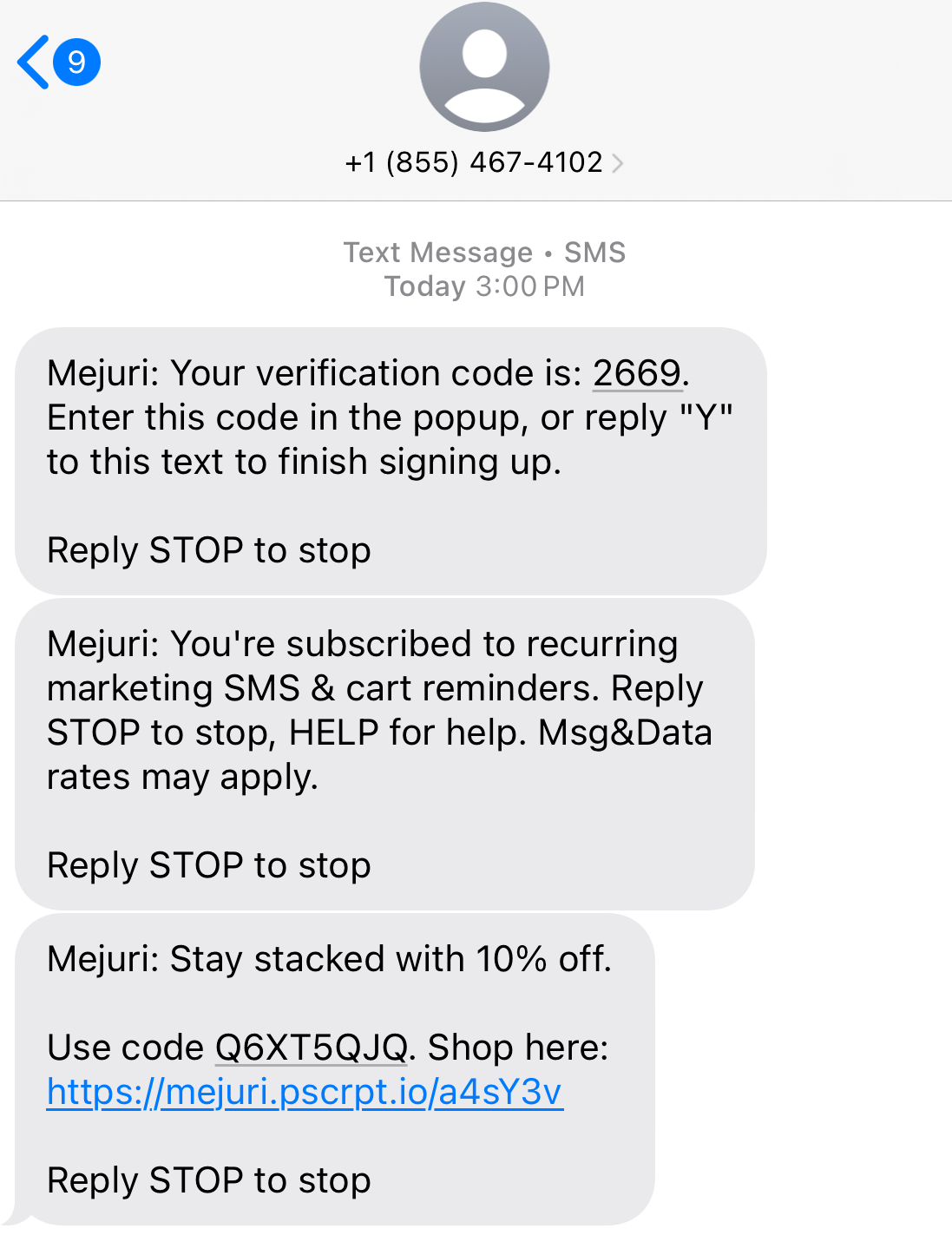
Example with Mejuri
Mejuri, a fine jewellery company, offers new SMS subscribers 10% off their next purchase with a custom discount code.
What are push notifications?
Push notification marketing is a personalized type of communication where brands send timely, direct messages to users. This is usually through desktops, mobile devices or in-app notifications. They’re often used as part of a retargeting strategy, but they’re also great for stand-alone campaigns.
While they don’t need a user’s phone number or email address, they usually are sent to shoppers who have your mobile app downloaded.
But now with Reactiv Clips, there’s no app download needed, either.
How does it work? Brands can send timely push notifications to customers who clicked on their ads without needing an app install or an opt-in. And the results speak for themselves.
Reactiv users see an average 60% open rate on personalized pushes and a 5–7% conversion rate.
Why they work
Here are the six biggest benefits of using push notifications:
- Increased ownership: Helps you avoid carrier restrictions, delivery issues or message filtering with your owned app or website.
- Stronger personalization: Guides your user directly from notification to app checkout in one click. Use best practices like behavioral triggers, segmentation, and seamless post-click journeys to do this.
- Cost-effective: Once you have an app up and running, push notifications are free to send. This is a great way to avoid any additional per-message fees.
- More rich content: Allows you to stand out on your user’s homescreen in an on-brand way that’s uniquely yours. Make the experience interactive with visual elements like emojis, GIFs and deep links.
- Increased retention and engagement: Apps with push enabled see 88% better engagement and 65% higher retention in the first 30 days than those that don’t.
- Revenue lift: Personalized push notifications generate up to 10x more revenue per user than email/SMS.
When to use them
Push notifications are best used for re-engagement, lifecycle marketing and driving repeat visits. They work especially well when the message is personalized, timely and action-oriented. They also have a clear call-to-action (CTA).
Try push notifications for:
- Personalized product recommendations: “Your favourites are back in stock. Check them out!”
- Post-purchase follow-ups: “Rate your recent order to earn points”
- Abandoned-cart reminders: “You left something behind! Checkout now for 10% off”
- Browse abandonment campaigns: “See something you like? Hurry–they’re going quickly!”
- Loyalty milestones or VIP rewards: “You’ve reached Gold Status! Use GOLD15 for a discount on your next order”
- Reactivation campaigns: “We miss you! Here’s 15% off your next order”
Remember: for the highest engagement and conversion lift, use context-driven messages based on behaviour triggers, like browsing a certain product or adding something to cart.
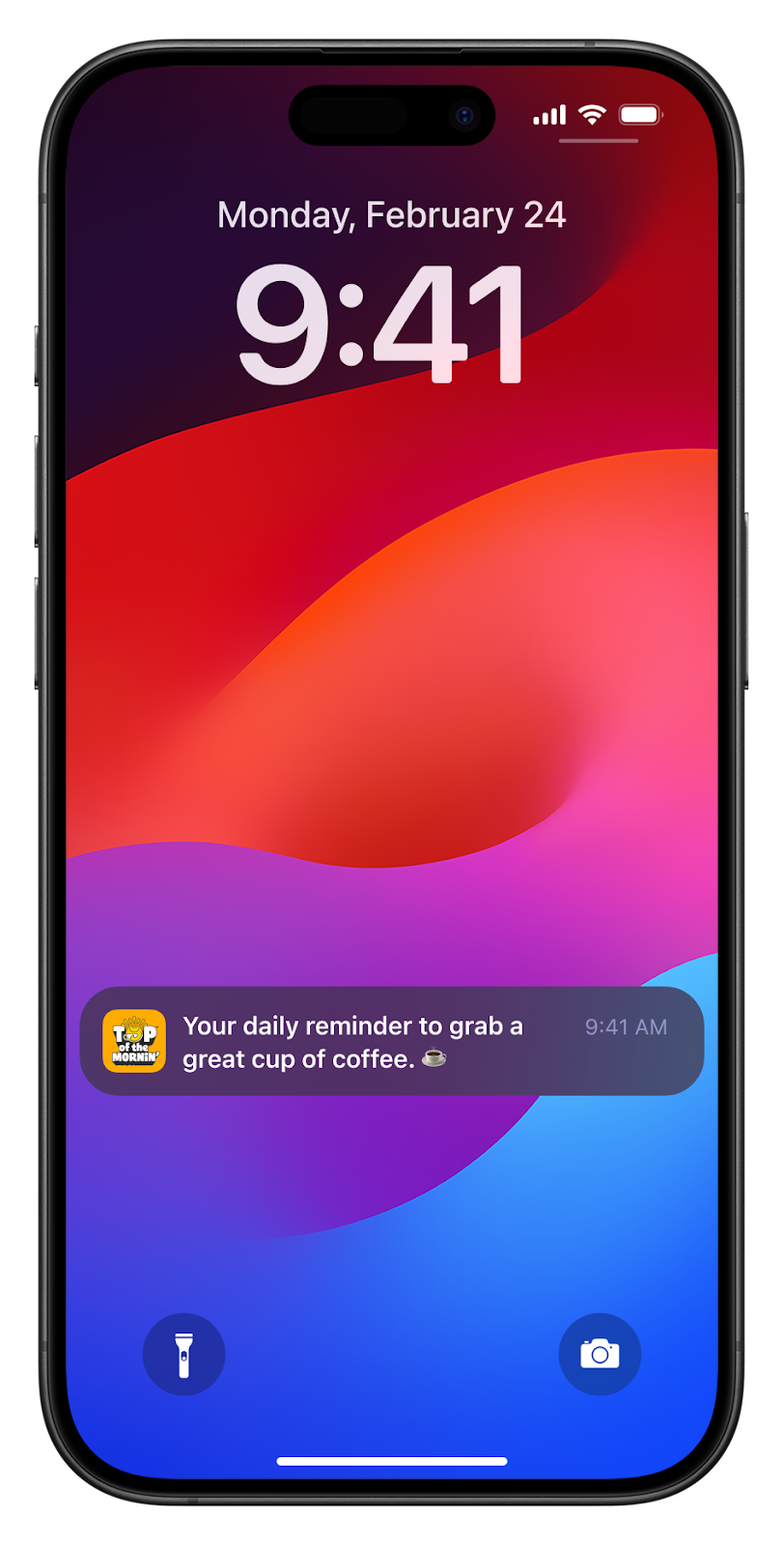
Example with Top of the Mornin’
Top of the Mornin’ Coffee takes a cozy, creative approach to push notification marketing. They use them to build community and loyalty. Rather than conversion-based copy, the brand sends reminders to “Have a great day!” or “Enjoy a cup of coffee” (aww) in order to stay top of mind.
And it’s working—they’re seeing higher brand affinity and repeat engagement from app users. How sweet is that?
SMS vs. push notifications—what’s the difference?
They may both pop up on your phone screen, but push notifications and SMS messages are not the same.
In a nutshell:
- SMS marketing is great for ensuring your customer sees and opens your message immediately.
- Push notifications are best for driving engagement and retention with hyper-personalized behaviour-triggers.
Here’s a breakdown of other important differences:
| SMS | Push notifications | |
|---|---|---|
| Delivery and access | Sent via carrier network to a user’s phone | Delivered through app/web platform (unless you’re using Reactiv Clips, which make app-free push notifications possible) |
| Message format and length | Simple, text-based, up to 160 characters | Under 10 words, can include visuals, CTAs, emojis or deep links |
| Opt in and control | Users share phone number, opt out unsubscribes them completely | Users choose what type of notifications to receive through app/browser permission (or Reactiv Clips). This flexibility can lead to lower unsubscribe rates and higher long-term engagement. |
| Level of personalization | Basic segments, ideal for direct, one-to-one communication like transactional updates or short-term promotions | Deep, behavior-driven. Excel at hyper-personalized, context-driven messages based on real-time behavior. |
| Filtering risk | Rising with “Unknown Sender” filters | Minimal once opted in |
| Privacy and deliverability | More regulated, new filters like Apple’s iOS 26 “Unknown Senders” feature moving marketing texts into a quiet side folder | Operates within your owned system, reducing dependency on external networks and improving deliverability |
| Cost | Brands pay per message | Free once users opt in |
| Ownership | Third-party carriers | Brand-owned |
How iOS 26 is changing the SMS playbook
With Apple’s recent iOS 26 rollout, the new “Unknown Senders” filtering can push any text from a number you haven’t saved into a quiet side folder. This applies even if you’ve texted that number before.
This means that if you’re only using SMS marketing, the visibility of your messages might be hurt.
We’re not saying SMS is dead—rest assured, she’s alive and kicking. But the playbook is changing. If SMS is your only mobile messaging channel, you may want to rethink your mix.
Push notifications can help fill in the gap left in your customers’ message inbox. And remember: Reactiv Clips let you send push notifications without needing an app install or an opt-in.
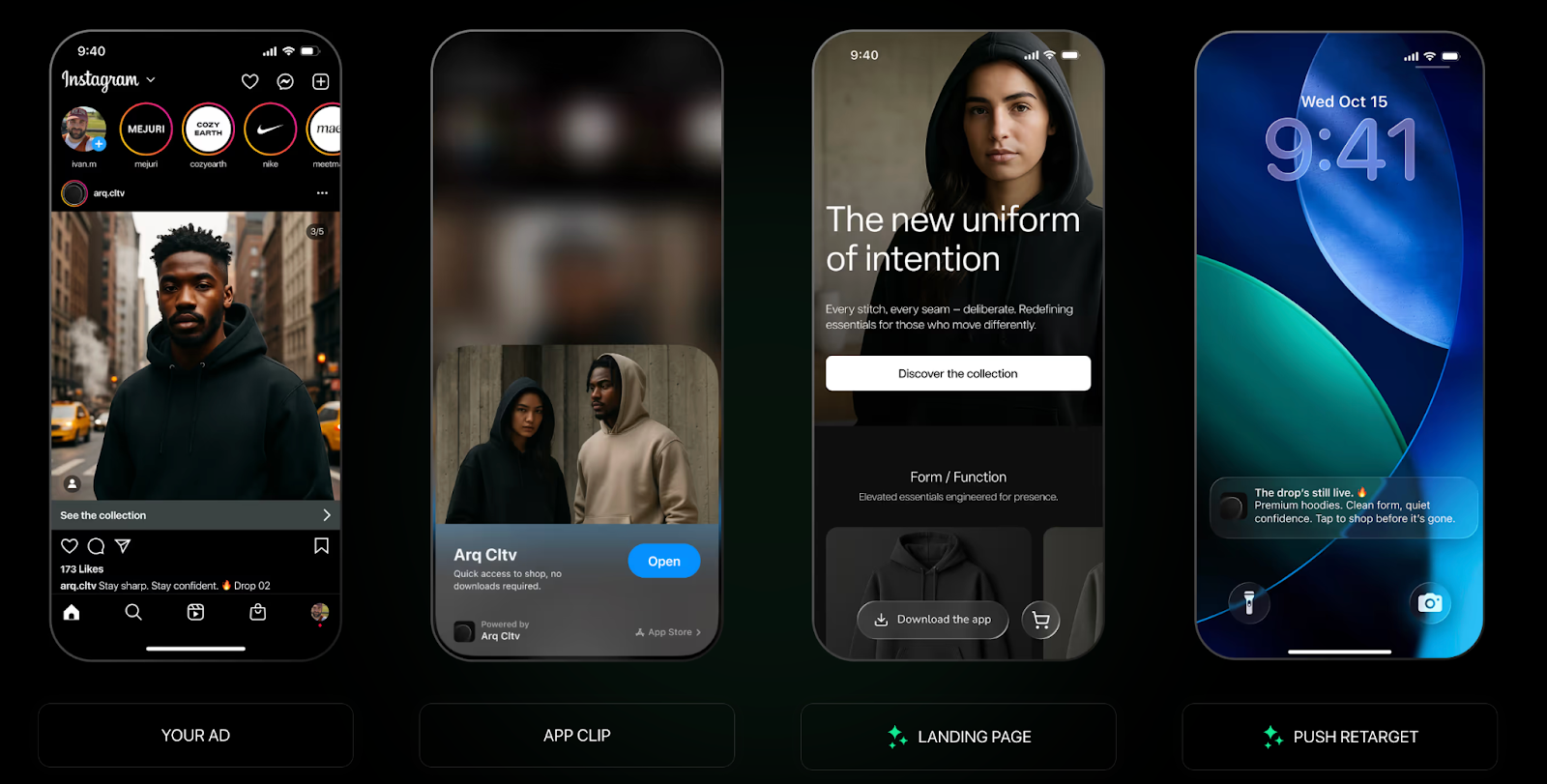
Future-proof your mobile marketing by powering SMS flows with smarter landing pages and automatic push notifications.
Do you really need to use both? (spoiler alert: yes)
It’s really not SMS versus push notifications—they’re actually better together.
Like the best superhero and sidekick combos, SMS and push notifications amplify each other. They’re a regular dynamic duo—at least in the mobile marketing world.
Using both of these mobile marketing channels helps strengthen end-to-end communication and improve your remarketing flow. They also help target separate stages of the customer journey.
It’s worth reaching out in multiple ways, too, because omnichannel campaigns with SMS are 48% more likely to convert. That’s potential you just can’t afford to miss out on.
Another way to maximize your post-click conversions? Try integrating both channels with your remarketing and retargeting flows.
Need even more inspiration? Check out these retargeting ads examples that successfully converted.
Your winning strategy in three simple steps
So, how do you start building your SMS and push notification strategy? It’s actually easier than you’d think.
Here are three simple steps to get started:
- Start with push notifications for app/web users (or users who engage with an ad clip) to maximize owned engagement.
- Use SMS for acquisition discounts, transactional order updates or to amplify new product drops.
- Trigger coordination to make sure you’re not spamming the same customer across channels.
Perfectly balanced, as all things should be: Cozy Earth’s strategy
Cozy Earth is a luxury bedding and loungewear store that has struck the perfect balance of SMS and push notification marketing.
Alongside their fully optimized ecommerce store, Cozy Earth offers a mobile app for exclusive memberships, wishlist features, and special offers.
When a new customer visits the site, they’re offered a 25% welcome discount if they opt in to SMS messages.
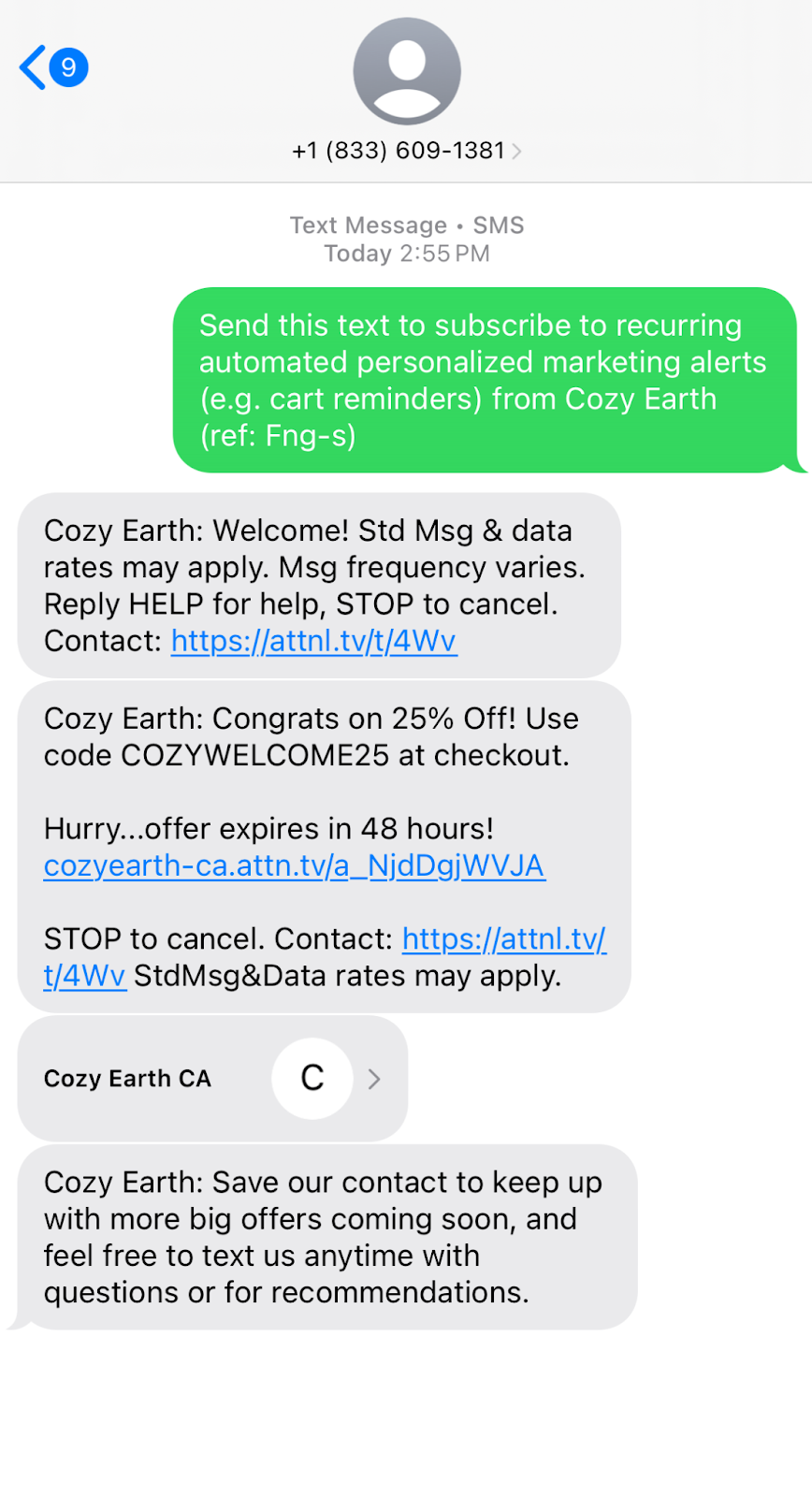
Cozy Earth also makes it easy for the customer to add them as a contact—a crucial step to avoid being filtered into the Unknown Senders folder.
Lastly, they leverage push notifications for app users or customers who click on their social ads via Reactiv Clips.
Reactiv is redefining what’s next in mobile marketing
New privacy updates have changed how brands reach customers via SMS. But like we said, this isn’t the end of SMS, just the latest iteration.
Just as marketers once learned to balance email and SMS, the next phase is about balancing SMS and push notifications. Mastering this is the key to building stronger, more adaptive communication strategies.
Remember: the question isn’t whether to use SMS marketing or push notifications. It’s how to use both in a complementary way to maximize your mobile engagement.
Reactiv is ready to help you future-proof your strategy with app-free push notifications to complement your SMS campaigns.

See Reactiv on your storefront.
Book a demo and we'll walk you through native apps and App Clips running on your Shopify store.