
Post-click is the trick: Optimizing ad campaigns for better results
Optimizing ad campaigns doesn’t end with targeting, creative, or budget. It continues after the click.
March 15, 2026
11 min read
In this article

Subscribe to Our Newsletter
Get mobile commerce insights. No fluff, just what you need to build smarter.
You know the moment. You thought your favourite hero was down and out, but suddenly they take up their father’s sword or find a magic stone —or they pull a sword from a stone—and unlock their full potential to win the day.
We may not live in a land of magic and monsters, but in the mobile ad space, there’s a power-up that’s even better: using Reactiv to help optimize your mobile ads.
Reactiv Clips take users straight to product-level content matched to the creative, with fast load times and no required app installs. And you don’t even need to journey to a galaxy far, far away to use it (seriously, you can start today).
But why is mobile ad optimization so important, anyway?
Think of this: even when ads drive clicks, the post-click experience often determines whether a user converts or bounces. In 2024, mobile ad spend also surpassed $400B+, with 82% of all digital ads viewed on mobile devices.
Reactiv optimizes post-click experiences to make every click count. Read on for 5 top tips to help optimize mobile ad campaigns and drive real customer engagement.
What is ad campaign optimization?
Optimizing ad campaigns means improving your ad performance over time to help reach your goals. Think Rocky Balboa running up and down the steps of the Philly Museum of Art. You should put your marketing campaigns to work for you just as hard.
Your exact goals will depend on your campaign purpose, but they might include:
- Higher mobile conversion rates
- Higher app install rates
- Lower cost per acquisition (CPA)
- Higher lifetime value
- Shorter path to purchase
- Anything else you’re optimizing for
But unless your goal is brand awareness, clicks don't automatically equal success. Everyone’s been guilty of accidentally clicking on an ad before bouncing out.
Part of mobile ad optimization means targeting users who intend to buy. This helps lower your return on ad spend (ROAS) and maximize every dollar in your ad budget.
Another tip: what happens after someone clicks on your ad is just as important as the ad itself.
The post-click mobile experience is where the user either converts or bounces. That’s why optimizing every step of your mobile ad funnel—from audience targeting to landing page experience—is key.
Why mobile ad optimization matters more than ever
It’s simple: mobile channels absolutely dominate the early stages of the ecommerce purchase journey.
A whopping 78% of global traffic to retail sites comes from mobile devices. Ecommerce discovery, browsing and even purchases now happen primarily on phones and tablets.
So in a world where shoppers see between 4,000 to 10,000 ads daily, ads optimization is not just important—it’s essential.
Social media platforms like TikTok, Instagram, Facebook, and YouTube. Or Google ads (and other search engines), mail apps, and SMS are also making it harder to unlock your phone screen without seeing an ad. Ad fatigue is a real issue.
The question is, how do you resonate through the noise? How will your ad be the one that a customer will actually remember and act on?
The answer: by optimizing every stage of your ad funnel.
Clicks vs. conversions
It’s key to remember that increased traffic does not equal increased sales. In today’s ecommerce landscape, cart abandonment rates are high.
Around 70% of online shopping carts are abandoned. A further 40% of mobile users abandon pages that take longer than 3 seconds to load.
Most underperforming ad campaigns fail after the click, not before it. So let’s talk more about how to avoid that.
How mobile ad optimization actually works
In a nutshell, mobile ad campaign optimization has four connected layers:
- Traffic source (Meta, Google, TikTok): Determines who sees your ads and how much intent they have before clicking. Based on platform algorithms, formats, objectives and placement context.
- Mobile intent targeting: Filters traffic to users most likely to convert. Uses behavioral signals (product views, past purchases, cart activity) over broad demographics.
- Mobile engagement: Measures whether users actually interact with your mobile experience after the click. Influenced by load speed, relevance and how closely the landing experience matches the ad promise.
- Mobile conversion and re-engagement: Converts engaged users into buyers and recaptures high-intent drop-offs. Uses retargeting, push notifications or follow-up flows that increase lifetime value.
Interested in advertising on Meta? Read our guide to mastering Meta ads.
5 ad optimization strategies for your unique goals
Every stage of a campaign matters—from setting the right goals to perfecting the post-click experience.
So now that you have the basics down, let's dive into actual, tangible strategies to help maximize your mobile ad conversion.
Align campaign goals and KPIs with business outcomes
The first step of any digital marketing or ad campaign is figuring out your goals. What are you working toward? What do you want a potential customer to do once they see your ad?
Mobile ad campaigns ask you to configure these goals directly in the platform and optimize delivery around them.
Once you choose your goals, you also need to align them with an overarching business purpose.
For example, increased ad clicks could support brand awareness where conversions increase revenue. Your next step is to select key performance indicators (KPIs) to track over the course of the campaign.
Use the chart below to help map your goals.
| Goal | Business purpose | When to use | KPIs |
|---|---|---|---|
| Ad clicks/traffic | Increase brand awareness and reach, introduce products to new audiences | Early-stage campaigns, brand discovery, content promotion, testing new audiences | Click-through rate (CTR), cost per click (CPC), total clicks |
| Landing page views | Drive potential customers deeper into your site or app, exposing them to products or offers | Campaigns where post-click engagement matters, testing landing page and messaging effectiveness | Landing page view rate, bounce rate, cost per landing page view |
| Conversions (add to cart, purchase, etc.) | Directly generate revenue, turn interest into actual sales | Retargeting high-intent users, ecommerce promotions, product launches | Conversion rate (CVR), cost per acquisition (CPA), return on ad spend (ROAS) |
| Value-based conversions | Maximize revenue per user, optimize for higher-value purchases or repeat customers | High-volume ecommerce, subscription services, or brands with tiered product pricing | Average order value (AOV), revenue per conversion, ROAS, customer lifetime value (LTV) by acquisition channel |
| App installs | Grow your mobile user base to increase app-driven revenue and engagement | App-first ecommerce brands, campaigns promoting app-exclusive offers or loyalty programs | Install rate, cost per install (CPI), install-to-first-purchase rate |
| App events (in-app purchases, sign-ups, engagement) | Drive monetization and retention through in-app activity, feeding conversion signals to improve ad performance | Post-install campaigns, re-engagement campaigns, loyalty programs, or ecommerce apps with product catalogs | In-app conversion rate, revenue per user, retention rate, engagement metrics (sessions per user, feature usage) |
Case study: Paula's Choice
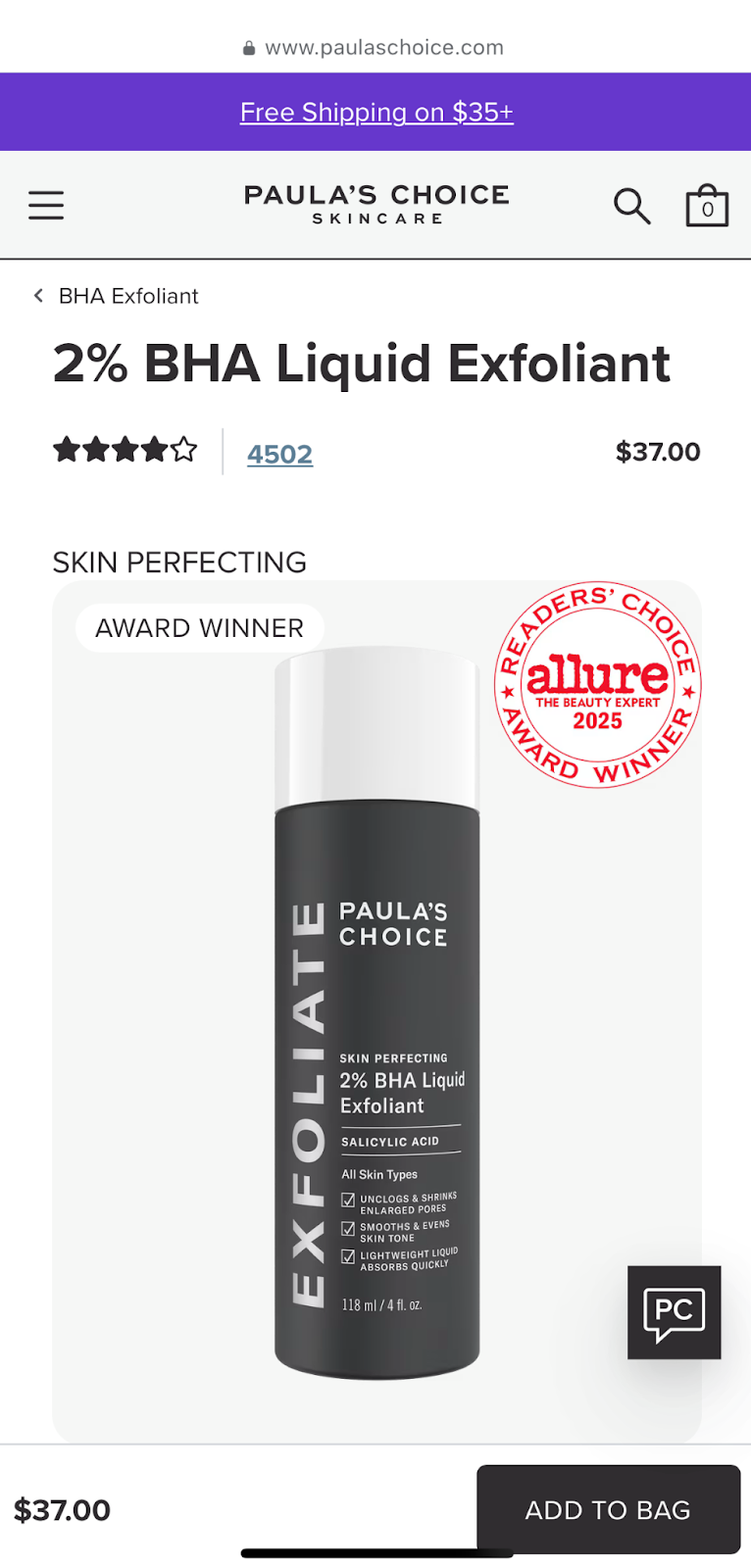
Paula’s Choice, a skincare brand, created a Meta campaign optimizing for conversions of its best-selling exfoliant. See how they’re nudging casual browsers to become buyers by:
- Showcasing social proof like “130,000 5-star reviews”
- Including a “Shop now” button
- Leading customers directly to the product landing page

Use highly personalized audience targeting
As the villain Syndrome famously said in The Incredibles: “When everyone’s super, then no one will be.”
The guy was admittedly a little nuts, but he did have a point. The right audience matters, and targeting everyone in your ad campaign means you’ll likely influence no one.
Customers see-through catch-all ad campaigns. We likely filter through them every day without even realizing it. And it’s not enough to group people together by broad demographics like age or gender, either.
Personalizing your mobile ad campaigns using behaviour signals, customer-journey stage or intent can improve the effectiveness of your ads.
In fact, 70% of retailers that invested in personalizing saw at least a 400% return on investment (ROI) increase.
High-intent segments to target for conversion campaigns
- Product viewers: retarget them with campaigns about the specific product they viewed.
- Cart abandoners: offer customers a time-sensitive discount for a product they left in their cart to drive urgency.
- Past purchasers: show customers something they’ve bought in the past to remind them about it and stay top of mind.
- High-LTV customers: surface subscription-focused ads or product bundles to get more out of your best customers.
Best practices
- Separate prospecting and retargeting campaigns. Customers who are in the discovery or consideration phase have very different intent versus those who are ready to buy.
- Build lookalike audience segments from purchasers, not site traffic. Export segments of your most loyal customers and feed them into digital advertising platforms to target similar shoppers.
- Focus your budget on target audiences most likely to buy. Optimizing your ads leads to lower customer acquisition costs (CAC) and a 10x higher return on ad spend (ROAS).
Case study: Speedo
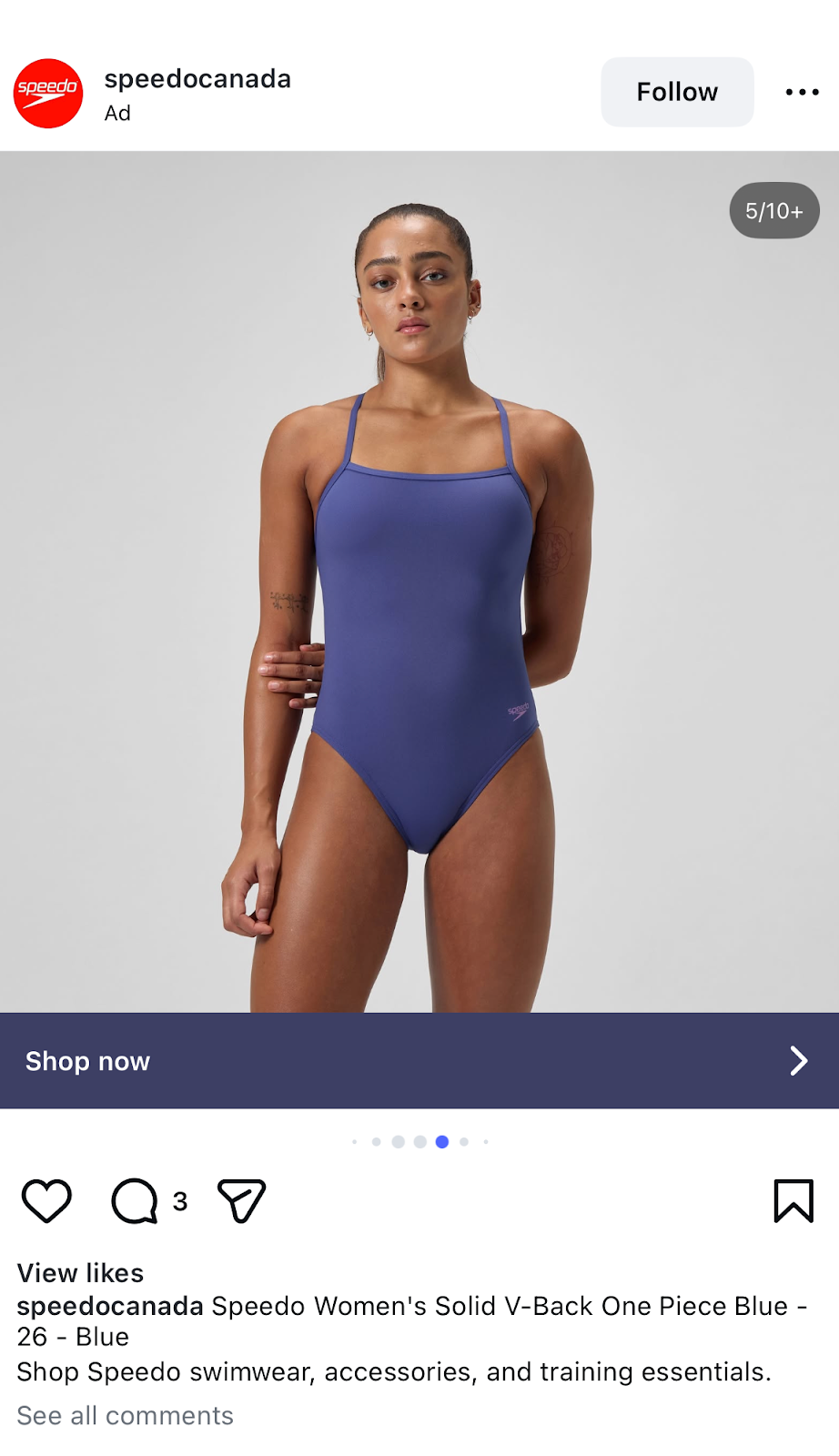
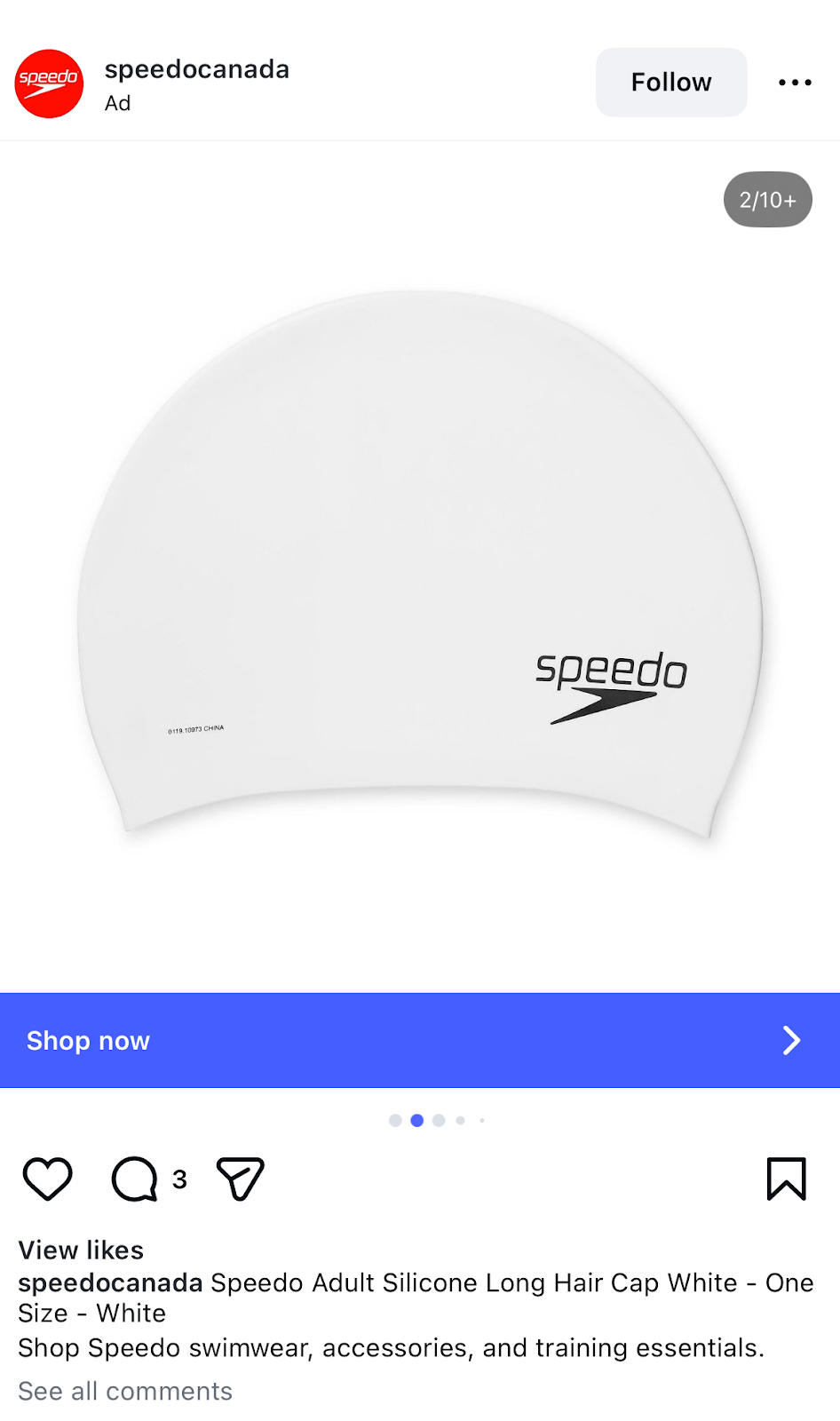
Speedo (yes, that Speedo!) retargeted this user through a shoppable Instagram carousel ad based on their previous browsing habits. They did this in two simple steps:
- Lead with the actual product the user has browsed before (the goggles)
- Show complementary products like a swim cap and bathing suit to increase potential AOV
Targeting based on purchase intent means the user is more likely to click on the ad or scroll through the carousel.

Consider the creative, format, placement and channel context
Different mobile ad formats generate different levels of attention and intent. Optimizing creatives without considering where and how users see them can get clicks but few conversions.
It’s best to diversify the types of ads you use, where you place them (based on your audience’s behavior) and what they look like. Here are some best practices.
Creative
- Hook viewers in 2–3 seconds by highlighting product value
- Limit text and visual clutter to hold attention
- Let users see the product in action without relying on lifestyle imagery
Format
- Use vertical, full-screen formats
- Video is king on mobile—68% of users engage with mobile video ads
- Avoid copying and pasting desktop-first creatives resized for mobile
- Match format to funnel stage—like detailed explainer ads for discovery and user-generated content (UGC) ads for consideration
Placement
- Use a mix of these different ad types per campaign:
- Feed and Stories ads on social platforms
- Short-form vertical videos like Reels, TikToks, or Shorts
- Shoppable photo or carousel ads
- Display and interstitial ads
- Example: combine short-form video and static photo ads for the same product
Channel context
- Social feeds favor native-looking content
- Video placements reward fast hooks
- Retargeting requires product-level relevance
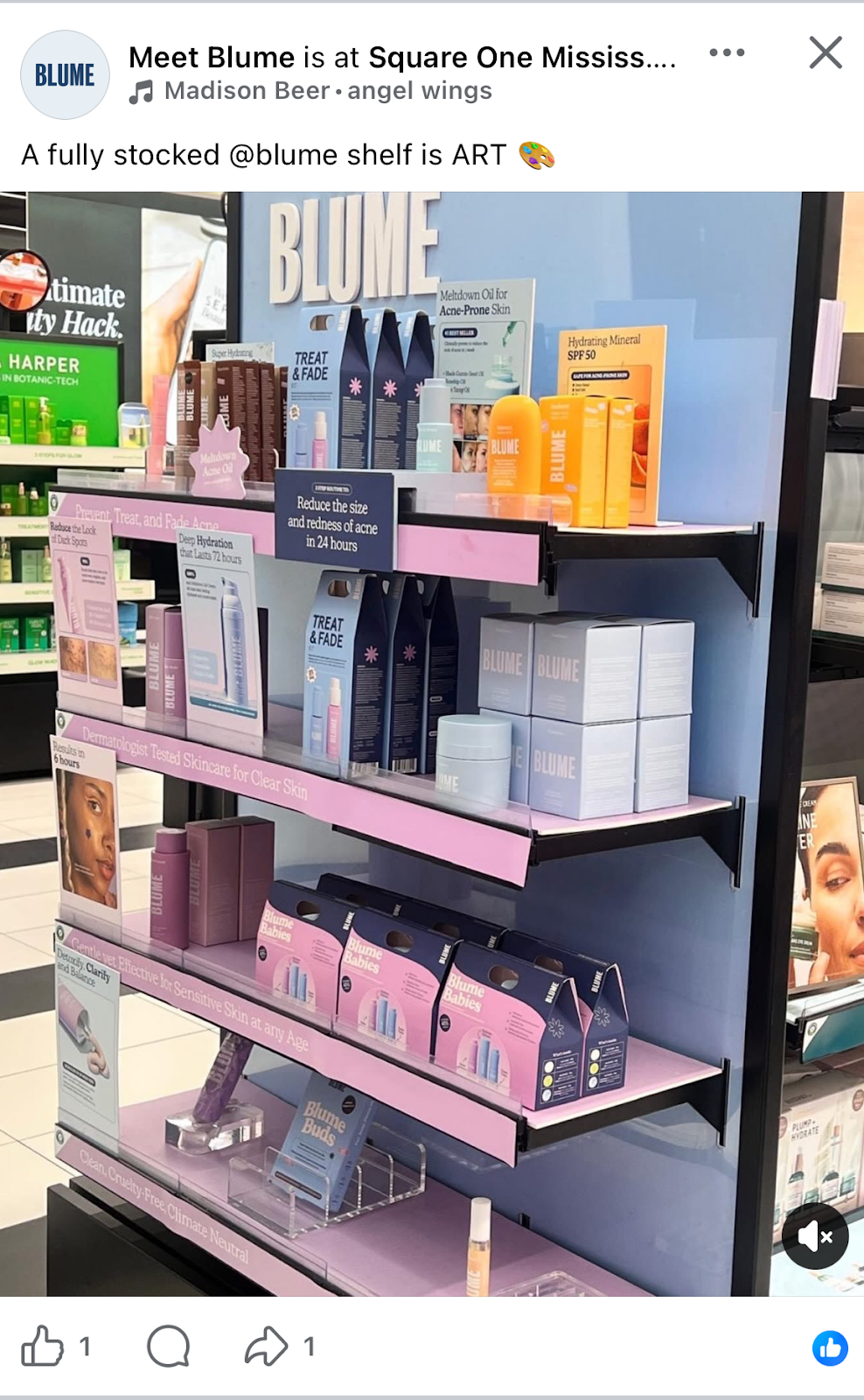
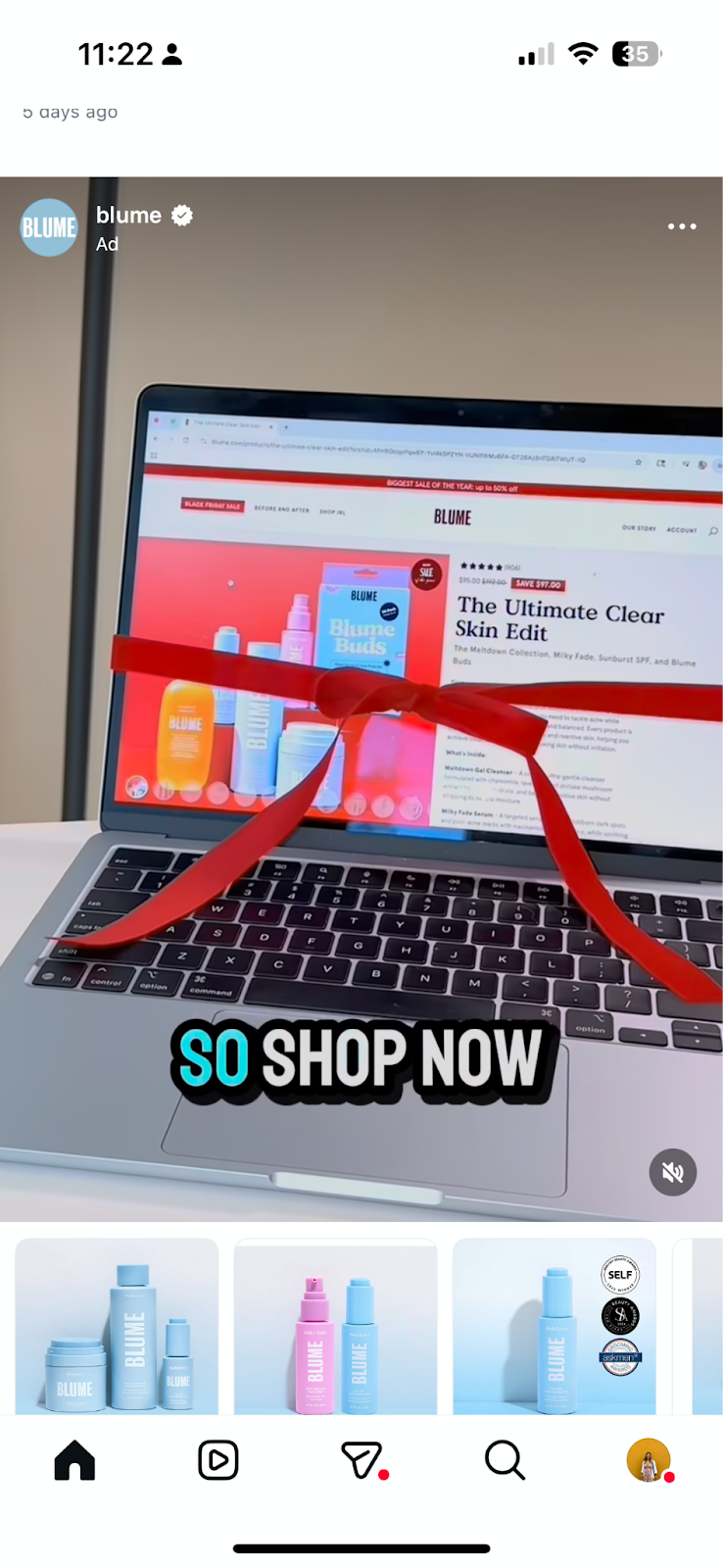
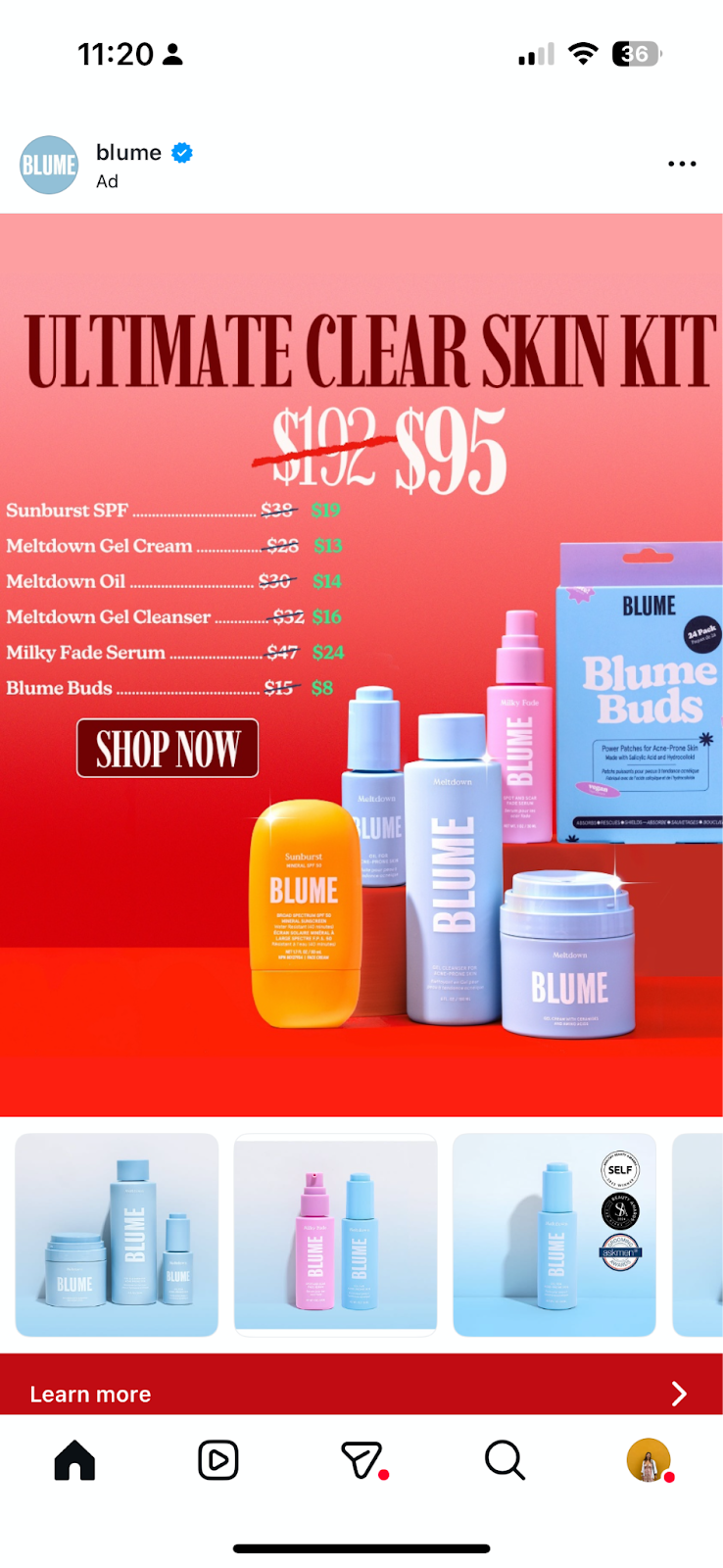
Case study: Blume
Blume uses different formats, offers and creative messaging throughout its mobile ad campaigns. For in-store displays, they use geo-targeted ads for in-store displays. For the online shopping experience, they use video ads. Finally, they use static images to show product bundles paired with shoppable product bundle cards.
By testing different types of ads across both Facebook and Instagram, Blume sees what converts best and doubles down.
Track and test campaign performance
Much like Batman brooding lovingly over Gotham City, mobile ad campaigns need the same amount of care and attention.
Once your campaigns are live, you need continuous tracking and methodical testing to drive real results in real-time. Without tracking the right performance metrics, traffic may increase but revenue can fall behind.
Testing your ads allows algorithms to fully optimize, reduces money wasted on underperforming ads, and gives you campaign data insights to scale what ads are working.
Successful A/B testing can also bring a 50% increase in AOV per visitor.
What to track
- Focus on conversion-driven KPIs rather than vanity metrics
- Track cost per purchase, mobile conversion rate, ROAS and lifetime value by acquisition channel
- Example: a skincare brand running a conversion-focused ad should track how many users add products to their cart and buy, not clicks or impressions
Common A/B or multivariate testing criteria
- Visual creatives: product images, lifestyle shots, videos, carousel vs. single image
- Messaging: headlines, CTAs, ad copy length and tone
- Ad formats: vertical video, static image, carousel, interstitials, UGC
- Post-click experience: landing page layout, copy, form fields, app install flows
Remember: testing is great, but avoid changing campaign budgets or objectives too often since this resets algorithm learning.
Don’t forget the post-click mobile experience
You’ve worked hard to stand out in the sea of mobile ads. You’ve earned a coveted click. Now, what you do with it can make or break your campaign.
This is where most ad campaigns lose money. Even the best ads fail if the mobile experience after the click is slow, generic or mismatched to user intent.
Remember: 83% of all landing page visits now happen on mobile devices, but only 50% of pages are optimized for mobile. Given this, it’s not surprising that mobile landing pages convert 8% lower than desktop.
Every unoptimized experience is potential revenue lost.
Ad platforms increasingly reward post-click success. Ads that lead to conversions are served more often, while those with high bounce rates see inflated CPAs.
Key areas to increase click-to-conversion success
- Fast load times: Compress images, streamline scripts and avoid heavy mobile frameworks.
- Message match: Ensure the landing page mirrors the ad’s product, offer and creative style to reduce friction. Don’t drop users on your homepage and make them do the heavy lifting to find what’s relevant.
- Clear path to conversion: Minimize taps—users should reach add-to-cart or checkout in as few steps as possible.
- Mobile-specific optimization: Use responsive layouts, full-screen product images and tap-friendly buttons.
- Social proof and product relevance: Highlight reviews, ratings or dynamic products.
Case study: Indigo
Indigo nailed the post-click experience in this Facebook campaign for their 2026 reading challenge. Here’s what they did:
- The user sees an aesthetic bingo-style graphic encouraging them to “Read more. Scroll less” with a matching caption
- They click and land on a page that explains the challenge, adds value and aligns visually with fonts, colours, and logos
- They download the challenge and get their own Bingo card to save on their phone
This works great because it’s meant to add value at every stage. Indigo promised users a reading challenge—and that’s exactly what they get. There’s no secret ploy to sell books or products that disrupts the flow.



Ready to power your clicks to conversions with Reactiv?
Optimizing ad campaigns doesn’t end with targeting, creative, or budget. It continues after the click. And that requires a whole lifecycle and marketing strategy on its own.
For mobile-first ecommerce brands, the post-click experience is one of the biggest opportunities for improving ROAS and lowering CPA. That’s where Reactiv fits in.
Reactiv acts as a post-click optimization layer, removing friction and making every click count. With Reactiv Clips, users land instantly on product-level content tailored to the creative without slow load times or forced app installs.
The results? Lower bounce rates, higher conversions and ad spend that keeps working beyond the click.
Reactiv closes the gap between engagement and conversion, optimizing campaigns both the ad funnel and the mobile experience.


See Reactiv on your storefront.
Book a demo and we'll walk you through native apps and App Clips running on your Shopify store.