Subscribe to Our Newsletter

Get mobile commerce insights—no fluff, just what you need to build smarter.
Thank you! Your submission has been received!
Oops! Something went wrong while submitting the form.

Mobile Conversion Rate Optimization (CRO): What It Is & How to Do It Right

By  
Tina Donati
August 25, 2025

Here’s the hard truth for ecommerce brands: Mobile now dominates ecommerce traffic but still lags behind desktop in conversions. 

Specifically, in 2025, ecommerce conversion rate benchmarked 4.8% on desktop vs. 2.9% on mobile

But at the same time, customer acquisition costs are up 40% between 2023 and 2025, and every wasted click hurts more than ever. You can’t keep throwing money at traffic and expect better results. 

Here is the problem with current mobile app interfaces: it’s not just a design issue—it’s a format issue. Most brands are still trying to force a website experience into a mobile screen, but a shrunken website isn't the answer. Instead, you need to create a mobile app experience built for engagement, return visits, and higher LTV.

Let’s talk about how to design for the format, not just fitting the format.

TL;DR: Mobile CRO in 60 Seconds

Here’s the rundown in less than 100 words: 

Mobile CRO means improving the mobile experience that you offer to turn visitors into customers. Despite driving the majority of ecommerce traffic, the conversion rate of less than 3% doesn’t add up. 

To do this, brands are shifting toward mobile apps and app-like experiences that engage users long-term and enable push re-engagement—true mobile CRO. 

CRO for Mobile vs Desktop: What’s Actually Different?

For starters, consumer behaviour in general is different on mobile versus desktop. On mobile, people shop while multitasking; whether they’re distracted, in bed, or on the go. This means your conversion windows are short and timing matters more than ever—typically peaking from 9PM to midnight. 

This calls for optimizing those shorter conversion windows, placing more focus on timing that makes an impact.

Additionally, mobile-app experiences are generally more controlled, engaging, and persistent to grasp the attention of the user. With push notifications, mobile gives you the advantage of precise control over re-engagement and personalization, something that desktop doesn’t. 

Why brands are shifting from mobile web to mobile app strategy

As a brand, you own the experience in your mobile app. You’re not constrained by browser compatibility issues or third-party platform limitations. This means that you have more freedom when it comes to the design, the look, and feel of your app. You can also plan and adapt new paths of engagement and conversion for your users based on performance. 

Mobile apps also give you more ownership and control over customer data. With customer privacy laws becoming more strict, it’s challenging to capture buyers from a browser. But when a customer downloads a mobile app and creates an account, you have complete customer profiles that you can use to personalize their shopping experience—in the app and externally on other channels.

Brands are also making the switch to mobile apps because of customer retention. Mobile apps are generally built for stickier engagement because of quicker access via push notifications, badges, and in-app reminders. 

How to Increase Conversion Rate on Mobile (Without Throwing More Money at Ads)

Conversion rate doesn’t only rise as a result of flooding in ads. There are other, more discrete ways to encourage users to convert.

Invest in features that bring people back. I.e: invest in customer engagement tools and strategies. Whether it’s adding personalization to your consumer’s journey, or improving the general app onboarding, upping your engagement leads to upping your conversion rates. 

Here are some tips:

Optimize Design for How People Actually Browse

Don’t just shrink your website—redesign for mobile behavior.

Take The Scent Reserve, for example. Rather than implementing their desktop website to fit mobile, the perfume brand strategized to feature its top-converting product bundle right on the homepage hero in their app, sending traffic directly to their highest-performing page.

Or take Vitae as another example. The activewear brand’s wellness app boasts a fantastic design, complete with custom wishlists, organized product pages, and a wealth of wellness resources, all designed to make the experience delightful for shoppers.

Use Push to Recover Lost Conversions (and Spark Repeat Purchases)

Retargeting consumers after they’ve shown a loss of interest can feel so daunting. But sometimes they need a simple push to act as a reminder to convert. Brands using Reactiv are seeing open rates of ~60%, with conversion rates between 5–7%. This is because they’re pairing push with our Reactiv Clips feature.

Take the flower, home goods, and gifting brand Venus et Fleur as an example. The brand runs Reactiv Clip campaigns. Here’s how it works: 

When a shopper taps their ad, it takes them to a Reactiv Clip—a lightweight version of the mobile app, which the shopper doesn’t have to download to explore

Venus Et Fleur then gets a first-party push token that can remind users about their abandoned cart, previous engagement, and more. No IDFA or cross-app tracking required.

Reactiv Clips allow for unlimited real-time push notification retargeting for up to 8 hours post-click—without the shopper even having to opt in to receive push. 

Just like that, that single paid click can turn into at least three more conversion chances.

Here’s another example from the coffee company Top of the Mornin’, which uses push notifications not just for recovery, but for ongoing customer education and retention. 

One of the top Reactiv features that Top of the Mornin’ leverages is push notifications. But not in the way most brands do. They use push notifications primarily for brand-building rather than direct conversions, like sending uplifting messages like “Have a great day!” to engage their app users.
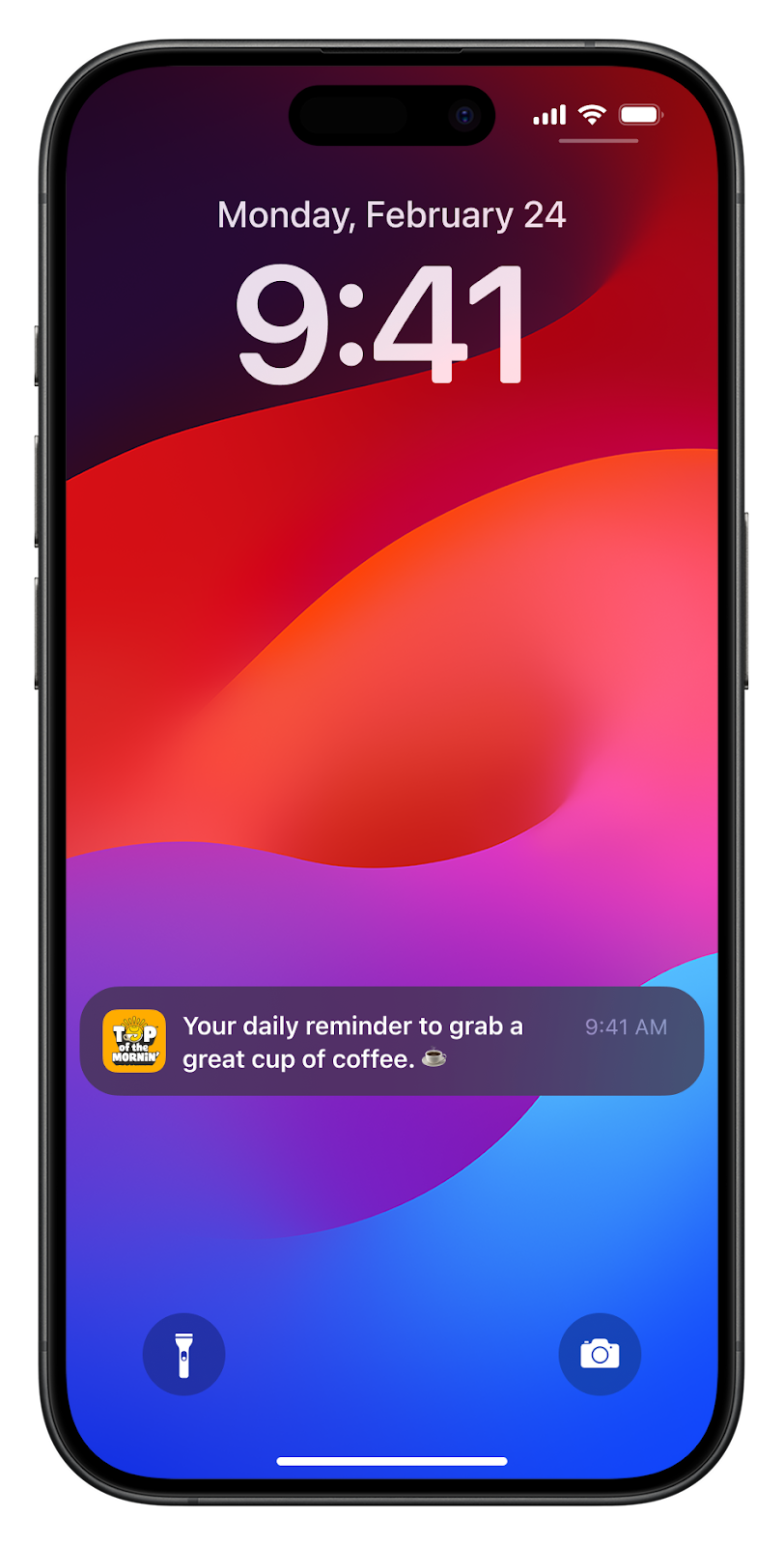
While they may have launched their mobile app with community-building in mind, it paid off financially too. Each month after launching, the brand saw its AOV climb, and in just three months, AOV increased by more than 17%.

Read more about it here

Provide Value Beyond the Products

Consumers can spot value beyond your product offering. Think about value-added features and services you can build into mobile that align with your brand identity. 

Our case study of Missouri Star Quilt Company demonstrates this perfectly. The quilt company implemented a Watch Page that provides value to avid quilters through tutorials, but also is built for conversion by making these tutorials shoppable, highlighting products that were shown in the videos. 
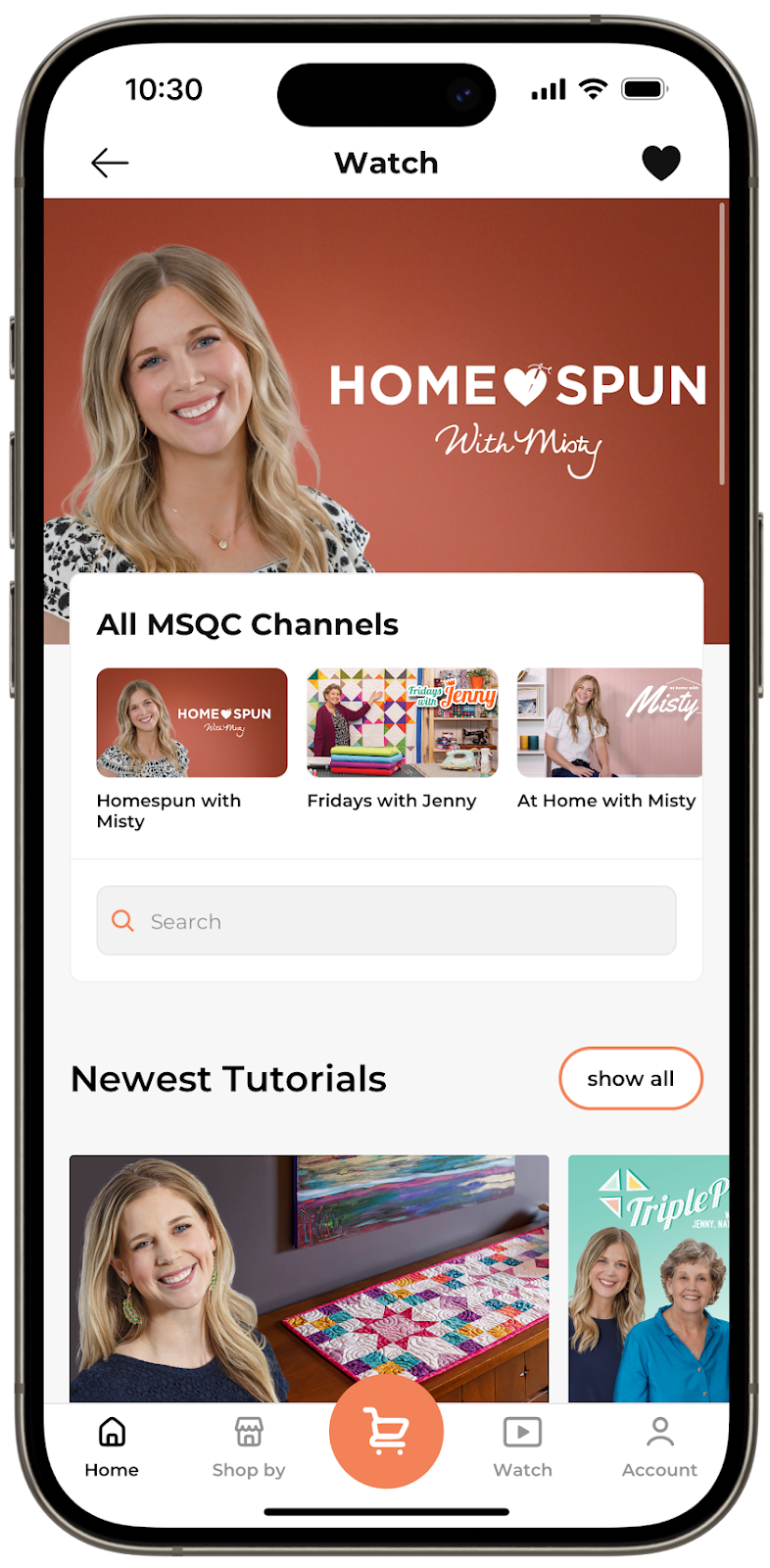
Another way the brand adds value to the customer experience is their custom in-app feature known as “the Bundle” to encourage regular purchases. This feature allows customers to hold an order for seven days to add more items, aiming to qualify for free shipping and consolidate shipments. 

Read more about MSQC and Reactiv here

Prioritize Speed and Simplicity

Many factors contribute to a good mobile CRO, and not all of them have to do with putting out ads. 

Focus on speed, as loading and navigation times are key drivers of user experience and engagement. Faster load times lead to lower abandonment. Especially on mobile, as users are usually on the go, multitasking, or could easily be pulled elsewhere, every second matters.  

Make sure to keep things simple for the average user. It’s common for users to drop off when navigation becomes difficult or feels overwhelming. This is important for mobile interfaces because screen space is already much more limited, meaning that you have to design with intent.  Keep things easy with clear CTA’s, fewer fields that add friction, fewer barriers to clicking purchase—no need to overcomplicate. 

Push further with Reactiv Clips

Here’s the thing: people are already tapping your ads — but every click could actually generate three more chances to convert.

Mobile CRO isn’t just about squeezing more from what you have, it’s about creating a better, more engaging experience that keeps people coming back.

Start your mobile CRO with Reactiv. Need more convincing? Across the Reactiv network we’ve found:  

  • Retention: 3–4× higher than mobile web
  • Repeat purchases: up to 6× higher
  • Push open rates: ~60%, with 5–7% conversion
  • Customer Acquisition Costs: down by as much as 75%

See Reactiv in Action

FAQ: Mobile Conversion Rate Optimization

Why is mobile conversion rate lower than desktop?

It boils down to user behaviour on mobile vs desktop. On mobile, users are often distracted or multitasking. User intent on mobile is often casual browsing without an urgency to commit to purchasing. Compared to desktop where users are more in a research or purchase mindset. 

Functional factors also contribute to a lower conversion rate on mobile. Smaller screens, slower navigation, and lack of re-engagement tools (like push notifications) all contribute to lower conversion rates compared to desktop.

How can I increase conversion rate on mobile?

  • Use mobile app or app-like experience for better customer engagement and retention 4
  • Send intentional and timely push notifications after ad clicks/ signs of interest 
  • Add personalization to the consumer’s mobile experience 
  • Perfect functional areas such as speeding up loading times, clean up UI, and simplify mobile navigation. 
  • Spotlight your top-converting products right away so your consumer can’t miss it on mobile. 

Do I need a mobile app to improve mobile CRO?

At the end of the day, you don’t need a full app.

But you need an app-like experience. Reactiv Clips, for example, deliver app-like journeys instantly, without a need to download, letting brands send push notifications, drive return visits, and increase conversions—all without the friction of the App Store.

What’s the difference between CRO for mobile and desktop?

People interact differently with desktop versus mobile, often with different intentions. Therefore, the CRO between the two will be different as well. 

Desktop CRO prioritizes longer, more focused browsing sessions to get the user invested. While on the other hand, mobile CRO prioritizes speed, simplicity, and re-engagement tools like push notifications to get the user interested. Mobile behavior is different—so optimizing for it requires a different approach.

How do push notifications improve mobile conversion?

Push notifications are all about retargeting. With push notifications you reconnect with shoppers that have tapped an ad or engaged with your app. Push notifications have ~60% open rates and can convert up to 7% of users, therefore upping your mobile CRO. With Reactiv, you can send these notifications even without opt-in, using Apple-approved first-party engagement.

Other Similar Blogs

What Is an App Clip? The Complete Guide to iOS Mini Apps

With Apple’s App Clips, users can access a lightweight version of an app instantly — no download required.

Do you remember playing Snake?

Whether you have fond memories of slithering across a tiny Nokia screen or that reference just made us look super old, Snake is widely considered one of the first mobile phone apps. Shipping pre-installed on Nokia phones in the late 1990s, it was the catalyst for phones being more than, well, phones.

We won’t bore you with a full history of mobile apps, but fast-forward to today, and apps are synonymous with smartphones. They’re integrated into nearly every part of our lives—from entertainment and shopping to banking and transportation. 

Apps are also widely understood as programs that are either pre-installed on a device or downloaded from an app store.

But there’s actually a third type.

With Apple’s App Clips, users can access a lightweight version of an app instantly — no download required.

The “5-second” App Clip definition

App Clips are fast and lightweight, so we’ll give you a definition that’s fast and lightweight too.

First introduced by Apple in 2020, an App Clip is a lightweight (under 15MB) version of an app that launches instantly, with no download required.

Let’s face it: custom apps are expensive and not in the cards for every brand. Plus, even if you have one, downloading an app can feel like a commitment. People are selective about what earns a permanent spot on their home screen. 

App Clips remove that barrier and allow businesses to deliver an app-like experience in the moment — without asking users to install anything. If you’re familiar with Reactiv Clips, our instant app experience platform, App Clips are the technology Reactiv Clips is built on.

How it works: the 4 triggers of App Clips

Sort of like the 4 horsemen of the app-pocalypse, there are 4 ways to trigger an App Clip. Each one has unique benefits and use cases that give App Clips the potential to be useful for almost any type of business.

NFC tags

Physical NFC tags can be used to launch an App Clip through a simple tap of a phone, functioning as the perfect bridge of digital and physical experiences. 

Because the interaction is instant and intentional, NFC tags are especially powerful for adding digital functionality in real-world environments. For example:

  • A digital loyalty card that adds a stamp each time a customer taps in-store
  • Locking mechanisms on things like electric scooters or bikes that use App Clips to lock and unlock with a quick tap
  • Product packaging that launches setup instructions or warranty registration directly from the box

QR codes

QR codes are another powerful way to bridge digital and physical experiences. Customers are already accustomed to scanning QR codes to open a URL, so the behavior itself isn’t new. 

But instead of sending users to a static webpage, businesses can use QR codes to open an App Clip – delivering an instant, app-like experience from anywhere.

Because of their universality and ability to be stuck on almost anything, QR codes are especially effective for speed and convenience, such as:

  • A tabletop QR code at a restaurant that a customer scans to launch an App Clip for browsing the menu, ordering, and paying 
  • A printed QR code on printed marketing tactics (like a drop card) so businesses can tie an app-like experience to a direct mail campaign
  • QR codes on in-store signage that open a Clip with product details, sizing guides, reviews, or availability

Apple App Clip Codes

Apple’s App Clip codes are an Apple-designed hybrid of NFC and QR codes. They look sleeker than your typical QR code (which is great if you don’t want your marketing materials to include a black and white box) and are designed specifically for opening up App Clips. 

Unlike standard QR codes, App Clip Codes can also incorporate NFC functionality. That means customers can either scan the code or simply tap their phone against it to open the Clip.

App Clip Codes have essentially the same use cases as QR codes and NFC tags. NFC-enabled clip codes are the best choice for physical display (print tactics, signage, packaging, etc.), while scan-only clip codes are best for digital displays or situations where the signage they’re displayed on will be out of reach from customers.

Digital links

Direct links are exactly what they sound like – direct links to an App Clip. While not as snazzy as an App Clip Code, they’re the simplest and easiest way to digitally direct a customer to an App Clip.

Because they function like any standard link, digital links can integrate seamlessly into almost any online campaign. Some effective use cases include:

  • Social media ads that open directly into a product-focused App Clip
  • SMS campaigns, such as abandoned cart reminders, that return customers to an app-like checkout experience
  • Apple Maps or Google Maps listings that instantly launch booking or ordering flows

The App Clip user journey

While understanding the triggers is crucial, it’s meaningless without a strong user journey. Remember how good it felt to slither around in Snake in a zen-like flow? Your user journey should feel the same – flowing quickly and seamlessly from trigger to conversion.

Step 1: The trigger

The first step is engaging a customer through one of the triggers discussed above. Whether they scan a QR code, tap an NFC tag, or click a digital link, the goal is simple: get them into the App Clip experience with minimal effort.

Step 2: Launching the card

Once triggered, an App Clip Card appears. This acts as a lightweight preview of the experience  – think of it like a quick bit of window shopping before the customer proceeds. It typically includes an image, title, subtitle, and an “Open” button.

If the customer chooses to proceed, they tap “Open” and the Clip launches instantly.

Step 3: Signing in or paying with Apple

Depending on the experience, the next step usually involves signing in with Apple or paying with Apple Pay.

This is where the beauty of App Clips really shines. They’re designed for speed and convenience, and syncing with an Apple account means users don’t need to create another login or password.

It’s fast, secure, familiar, and easy. Of course, it’s important to always give the option of a guest checkout too.

Step 4: Completing the task

The final step is nice and simple – completing the task! 

Whether it’s ordering food, unlocking a door, or purchasing a shirt, the entire interaction happens within a mini app experience without unnecessary redirects, downloads, or setup screens.

Key benefits of App Clips

Up to this point we’ve explored how App Clips work and the user journey from scan to conversion. But you might still be wondering why App Clips are such a game-changer. What sets them apart from a traditional app or from simply sending someone to a static webpage via a QR code?

App Clips provide a number of benefits that make them a powerful tool to have in your marketing arsenal.

Native app experiences without the download

An app download is a big ask.

77.9% of customers have said a mandatory app installation made them abandon a transaction, with that number going up to 87.1% for people aged 18 - 24.

With expandable storage being a thing of the past on most mobile devices, people are understandably pretty picky about what earns a coveted spot on their home screen. Even if your app is worth installing, asking someone to download it introduces extra steps — and extra opportunities for them to drop off.

The problem is, apps often provide a much better user experience than a mobile web page. Historically, brands have had to choose between locking stronger functionality behind an app download, or simplifying their app experience to have feature parity with their mobile site.

App Clips solve this dilemma by providing a full in-app experience without requiring a download.

Customers can instantly access native app features like faster loading, smoother navigation, Apple Pay, and Sign in with Apple — along with system integrations like the camera and microphone.

App Clips also act as a preview of your full app experience: if you provide a snapshot of a strong app experience, you might just earn one of those sought-after home screen spots.

One key thing to remember: an App Clip isn’t like an app – it is an app. Removing the traditional friction around app downloads unlocks entirely new ways for businesses to deliver native app experiences and integrations in a fast, bite-sized manner.

Reactiv Clips: built for ecommerce

Reactiv Clips takes the concept of App Clips and tailors them for ecommerce, turning high-intent moments into seamless, product-first mobile experiences. With Reactiv Clips, brands can get in front of new customers and guide them toward installing the full mobile app.

So what actually differentiates Reactiv Clips from App Clips? The shift from discount-first to product-first.

Reactiv Clips changes the traditional order of operations for an App Clip from:

  1. Download app
  2. Get discount
  3. Maybe shop
  4. Maybe stay

To:

  1. Tap
  2. Instant app-like experience
  3. Product
  4. Value
  5. Loyalty

The focus is on delivering a lightweight, app-like experience without a download — removing the friction and clutter often associated with traditional ecommerce journeys and delivering immediate value. 

If your Reactiv Clip is strong, the experience will sell customers on your app – and that’s where true loyalty begins.

8-hour push notification window

We mentioned above that App Clips allow you to take full advantage of native app features, but with the ecommerce focus of Reactiv Clips, one feature deserves special attention: push notifications.

We’ve explored the highlights of push notifications for ecommerce in the past, and App Clips provide you with an 8-hour push notification window to take full advantage of what they have to offer. There are four common types of push notification strategies, and the best one for you depends on what you’re doing with your App Clip:

  • Abandoned browse/cart nudges: If a customer didn’t make a purchase, they might just need an extra push (no pun intended). Plus, your chances are pretty good: CTRs on push notifications are 37% higher than email for cart abandonment campaigns. 
  • Transaction updates: These notifications are a great way to keep customers updated on their order, adding an extra layer of trust and communication.
  • Lifecycle messages: Even if a customer successfully converted, you can use push notifications to build the foundation of a longer-term relationship through loyalty program pushes or other engagement messages.
  • Promotional pushes: Use these to let customers know about sales, discounts, and deals.

One key thing to remember is that just because you can doesn’t mean you should. Only send push notifications if you have a strategy in place, and make sure they’re personalized – personalized notifications can receive up to 400% more engagement than untargeted ones.

App Clips in action: Use cases throughout different industries

Below are some examples of how App Clips can be used in a variety of industries to streamline a customer’s experience.

Restaurants

App Clips have become a powerful tool for streamlining the ordering experience. Panera Bread has become one of Apple’s flagship examples for how seamless this can be, and they’ve baked up something fast and efficient.

Customers simply scan the App Clip code, hit the “Open” button to launch the App Clip, place their order, and pay with Apple Pay. 

This strategy is effective for restaurants of any type, from fast-casual joints like Panera Bread, to sit-down experiences at bars and restaurants with App Clip codes at each table.

Services

Mobility company Spin turns everyone’s iPhones into universal scooter keys with their App Clips implementation.

By scanning the QR code on a Spin scooter, customers looking for a quick ride can instantly launch Spin’s App Clip, allowing them to unlock the scooter and hit the road. The ride can be paid for with Apple Pay, meaning no credit card entries or app downloads are ever required. 

This furthers Spin’s vision of making personal mobility more accessible than ever, with first-timers or experienced riders being able to get started in seconds.

Ecommerce

Cozy Earth has gotten really cozy with the concept of using Reactiv Clips as part of their retargeting strategy. 

With their strong Answer Engine Optimization (AEO) strategy, Cozy Earth is frequently recommended by LLMs like ChatGPT when users are looking for product recommendations. If a user clicks through the recommendation, a Reactiv Clip opens, allowing them to enter a fast, app-like shopping experience instantly. If a user clicks the link recommended by the LLM, a Reactiv Clip will open, allowing them to navigate the Cozy Earth app experience. 

Because they opened a Reactiv Clip, they can now be targeted by push notifications for the next 8 hours.

This strategy creates a win for both the customer and for the business: the customer gets to navigate a fast, easy-to-navigate app experience, while the business now has a direct way to retarget the shopper for 8 hours if they abandon the session and/or their cart. With this combination of AEO and Reactiv Clips, retargeting has never been easier!

Hospitality

Caesars Entertainment took an early gamble on App Clips and it paid off, providing their customers with the comfort that only a smooth App Clip experience can offer. 

Caesars integrated App Clips into their Las Vegas resorts, with various touchpoints to launch App Clips. Customers can get directions to their hotel room and other key areas and book restaurant reservations, while Caesars is able to then leverage system access to target them with push notifications.

Get started with App Clips

From biting pixels to bite-sized App Clips, mobile technology has come a long way since the days of Snake, and it’s important that brands don’t fall behind.

App Clips are one of the latest innovations, making things faster and smoother for customers while providing more flexibility for brands across all major B2C industries. These lightweight, native app experiences allow you to take full advantage of the mobile platform in ways static mobile webpages simply can’t. 

And for ecommerce brands, Reactiv Clips take the concept even further, delivering product-first mobile experiences that introduce customers to your app without requiring an immediate download.

Whether you’re looking to fine-tune your App Clip experience or starting from square one, we’re here to help

6 Benefits of Mobile Commerce You Can’t Ignore in 2026

For many brands, their mobile customer experiences simply aren’t keeping up.

In 2026, it feels like we’re always on.

Recent data show Americans check their phones 186 times a day, with 72% using them at work and over 84% checking within 10 minutes of waking. This is having a noticeable impact on web usage worldwide: 65% of global online traffic now comes from mobile devices.

This shift has fundamentally changed humans’ shopping behavior. Customers are shopping while commuting, scrolling social media, standing in line, or walking past a storefront and thinking, “Oh yeah, I meant to check that out.” 

If you can bring your phone there, you can shop there.

As mobile becomes the dominant platform, brands that prioritize it are gaining meaningful advantages across:

  • Conversion
  • Engagement
  • Customer lifetime value

Want to be one of those brands reaping the benefits of mobile commerce (also known as mcommerce)? We’re here to help.

What is mobile commerce?

Before we explore the benefits of mobile commerce, it’s important to define it: any transaction conducted on a mobile device (such as a smartphone or tablet).

It can take place through:

  • Native mobile apps
  • Mobile-optimized websites
  • Digital wallets/mobile payments (Shop Pay, Apple Pay, Google Pay)
  • Social commerce platforms (Instagram, TikTok, Pinterest)
  • QR code and NFC-triggered experiences
  • Conversational interfaces (AI chatbots, conversational commerce)

76% of adults have made purchases on their mobile phones, and mobile phone sales are forecast to reach approximately $856 billion in 2027. 

But despite mobile’s ubiquity, its conversion rates aren’t scaling at the same pace: 2025 ecommerce conversion rates benchmarked at 4.8% on desktop vs. 2.9% on mobile. 

So, why the divide? For many brands, it’s because their mobile customer experiences simply aren’t keeping up.

Mcommerce requires a dedicated marketing strategy that accounts for the different behaviour synonymous with the platform, like shorter sessions, higher intent, and a lower tolerance for friction. 

It also works best when brands design their mobile experience around the channel’s advantages instead of just rebuilding their desktop site in portrait mode. You have to understand and hone in on the benefits of the platform and tailor your experience toward them.

6 benefits of mobile commerce you can’t ignore

Below, we’ve highlighted six key advantages of mcommerce and how you can implement them as part of your app conversion optimization strategy

1. Convenience makes the path to purchase easier

Everyone’s on their phones. A lot. 

That level of convenience is impossible to beat when compared to other sales channels. Theoretically, people always have the ability to make a purchase, whether it’s during their commute, on a coffee break, or while lying in bed.

With Americans spending 4.5 hours on their phones each day, mobile has become the most natural channel for impulse purchases, repeat purchases, and subscription renewals. 

Maev, a premium dog food brand, has built an mcommerce strategy that’s as exciting for us as their food is for dogs. They’ve optimized every part of their mobile shopping experience for convenience: 

As soon as shoppers land on the site, they’re shown a best-selling product with a perfectly placed CTA to shop now. After clicking, they’re taken to the product page, where another well-placed CTA prompts them to add to cart.

For pet owners all-too familiar with the sudden “I think we're almost out of food!” panic, Maev makes it impossibly easy for its customer base to restock.

2. Faster checkout boosts mobile conversion rates

Check your phone right now (or, if you’re reading this on your phone, pull down your notification bar). You probably have at least one notification.

No, we’re not secretly tracking your phone. It’s just an educated guess, considering the average smartphone user in the US gets 46 app push notifications per day

With that much noise competing for attention, you only have a small window of time to convert before shoppers get distracted and move on. You actually only have 3 seconds – 53% of mobile site visitors will bounce if a page takes more than 3 seconds to load.

People move fast on mobile, and your site needs to keep up. That’s why optimizing for speed is one of the best ways to drive sales on mobile

Reducing friction wherever possible is essential, especially by:

  • Offering one-tap checkout options: like Shop Pay, PayPal, Apple Pay, and Google Pay
  • Saving customer information, such as addresses and payment details, to speed up repeat purchases
  • Reducing the steps between product discovery and checkout, to speed up the checkout process and minimize opportunities to bounce

Integrating digital wallets into your site addresses all of these, and it’s becoming the norm. 4.5 billion people used digital/mobile wallets to pay in 2025, and Shopify data shows that Shop Pay can increase conversions by over 50% compared with guest checkout.

By pairing these strategies with push notifications, mobile apps, and SMS nudges, purchasing can become as easy as tapping a button.

Obvi obviously knows what they’re doing when it comes to providing a lightning-fast mobile checkout experience. Customers can purchase a one-time order or subscription and pay directly on the product page – no checkout required. 

For those who do enter checkout, Obvi still keeps things speedy with multiple one-tap payment options and a simple three-step checkout flow. 

When it comes to discovery to purchase speed, you obvi can’t get much faster than this.

3. Mobile commerce powers social commerce purchases

The lines between social commerce and mcommerce are blurred.

64% of the global population uses social media, and 99% of social media users are accessing their platform(s) of choice on a smartphone – most people aren’t browsing TikTok from their desktop. Because of this, platforms like Instagram, Pinterest, and TikTok are built for mobile-first consumption. 

While these apps are nothing new, the way people are using them is changing, with an increasing focus on commerce. 52% of American consumers have made at least one purchase on a social media platform, and 34% of 18-34 year olds are making weekly purchases. 

It’s safe to say social platforms are mcommerce platforms.

These numbers aren’t surprising, because social commerce makes buying almost as easy as scrolling, by:

  • Reducing friction between discovery and checkout
  • Supporting impulse purchases from creator-led content
  • Allowing users to buy without switching devices – or even apps

4. Personalized push notification retargeting through Reactiv Clips

Sometimes customers just need a little push… from a push notification, of course.

Push notifications allow brands to re-engage shoppers instantly while purchase intent is still high. With an open rate of 50% versus email’s 20%, push notifications are a strong way to directly reach potential customers and get their attention.

In the past, a major disadvantage of push notifications was that shoppers needed to have your app installed. But with Reactiv Clips, that barrier disappears. 

Brands can send timely push notifications to customers who clicked on their ads – no install or opt-in required. The benefits of this speak for themselves. The average Reactiv Clips user sees:

  • 60% open rates on personalized pushes
  • 5-7% conversion rates
  • Up to 400% more engagement compared to untargeted marketing campaigns

Push notifications can also be tailored even further through geolocation triggers, NFC taps, and QR codes. For example:

  • A shopper walking past your store can receive a Siri prompt to explore your popular products
  • Fans at a stadium can buy a jersey instantly from their phone without having to download any apps
  • A nearby coffee lover can receive a notification to skip the line and order ahead from your café

Push notifications offer a powerful, mobile-native way to recover abandoned carts, send product reminders, and promote limited-time mobile commerce offers.

Cozy Earth knows a thing or two about it. Using tailored push notifications, they retarget shoppers who browsed a product but didn’t add it to their cart. When clicked, the notification opens an app-like experience in Reactiv Clips, then returns them to the product page to complete the purchase. 

Instead of sending an abandoned cart email into the ether, Cozy Earth can re-market to customers in a more noticeable, engaging fashion wherever they are (maybe even in bed…).

5. Mobile apps are more than a shopping channel

A common misconception about mobile commerce is that apps are nothing more than mobile storefronts. But they can be so much more.

To get the most out of mcommerce, you need to optimize for more than just conversions – you need to optimize for connection. 

Over 76% of customers say they’d choose to buy from a brand they feel connected to over a competitor, and 57% say they’ll spend more with a brand when they feel connected to it. Your app is the perfect vessel for this connection.

Apps allow brands to create fully-owned digital environments where they can:

  • Build communities for customers to engage and interact with each other 
  • Offer app-exclusive products or early access opportunities 
  • Run quizzes, surveys, or product feedback initiatives
  • Deliver educational or tutorial content

Missouri Star Quilt Company has stitched together a mobile community that demonstrates how apps can go far beyond shopping. By launching an app with Reactiv, they created a space for tutorials, daily deals, curated journeys, and community-driven content. 

This customer-first design drove 50,000 mobile users in two weeks and led the app to generate 10% of total revenue. 

Through this initiative, Missouri Star Quilt Company’s app has now become a hub for brand loyalty, education, and collaboration – deepening customer engagement while increasing lifetime value.

6. Seamless online-to-offline commerce

Shopping can’t be distinguished as “online” and “offline” anymore – everything has essentially become omnichannel.

Mcommerce connects in-person physical and online shopping experiences so customers can seamlessly shop across multiple channels. For example, a customer might see a pair of shoes in a store window, visit the brand’s Instagram page later, then go to their website and download the app to purchase the shoes. Afterwards, if it turns out they got the wrong size, they return them in-store, accessing their receipt directly from the app.

This isn’t an unrealistic scenario created to prove a point; it's real life: 73% of consumers use multiple channels throughout their shopping journey. Your storefront, app, and other digital touchpoints need to work together, not in silos.

A true omnichannel experience means that no matter where a customer makes a purchase, their purchase history, preferences, and loyalty status are all stored in one place – the app. 

Some brands even let customers check out directly from their phones via QR codes on packaging for instant reorders or in-store signage that launches mobile checkout.

With Reactiv Clips’ retail touchpoints, there are even more ways to seamlessly connect physical, mobile, and digital retail, including:

  • Capturing the attention of nearby shoppers: Geofence physical locations and automatically display Clips on a shopper’s phone through Siri Suggestions. If they open it, they’ll become a retargetable customer.
  • Including QR codes on shelves and product tags: QR codes allow customers to instantly access sizing guides, ingredient details, stock availability, and more.
  • Converting retail customers to digital ones directly in-store: Shoppers can join your loyalty program, opt in to restock alerts, and be notified of limited-time in-store offers – directly from an aisle in your store.
  • Booking 1:1 experiences: Customers can be prompted in-store to book personalized appointments and experiences on their phone.
  • Empowering staff to provide a richer experience: Staff can instantly demo complex products, share comparison charts, and highlight add-ons/bundles

Single-channel shopping is dead – and customers are craving convenience. 

Start experiencing the benefits of mobile commerce with Reactiv

With Reactiv, you have access to everything you need to build an effortless, engaging, and high-converting mobile commerce user experience. 

To recap some of the benefits:

  • Unparalleled convenience makes buying easier than ever
  • One-tap checkouts and mobile wallets allow purchases to happen at supersonic speeds
  • Custom mobile apps let you showcase app-exclusive drops, run quizzes, and provide educational/tutorial content – all while gathering first-party personalization data
  • Personalized push notifications help you break through the email inbox noise and re-engage customers anywhere, anytime
  • Apps that function as more than just a storefront allow you to build an engaged community surrounding your brand
  • Geolocation targeting, NFC taps, and QR code integrations seamlessly connect online and offline shopping and sync up loyalty programs, wishlists, and purchase history

Mcommerce is the future, so don’t treat it like an afterthought. With Reactiv, your brand can turn every mobile interaction into a conversion opportunity, build stronger customer relationships, and unlock the full potential of mcommerce. 

Interested? Book a demo today and let’s get started.

Mobile Apps Need SEO Too. Here’s What You’re Missing

Like SEO for websites, but designed specifically for app stores.

In an increasingly crowded app ecosystem, standing out takes more than just a good product. And with search engines indexing more app content than ever, Mobile App SEO is no longer optional.

Where to start? Right here, your crash course in boosting mobile app visibility. 

App Store Optimization (ASO): What is it and why should you care? 

When discussing app store optimization (ASO), we’re talking about the process of improving your app’s visibility and ranking in app stores like Google Play and Apple App Store. Think of it as mobile app SEO—like SEO for websites, but designed specifically for app stores.

And this is why you want to know this: In 2025, app stores are the top channel for app discovery. Apple’s June 2025 App Transparency Report showed that over 50% of app downloads come from organic search within the app store. Without ASO, even the best apps stay invisible.

Just like your website—or any marketing channel for that matter—great content isn’t enough anymore. It’s all about distributing your content and helping customers discover you. And with ASO, you’ll see the benefits take the form of:

  • More organic downloads. Which means more potential customers to retarget
  • Lower customer acquisition costs. You can scale back ad spend
  • Stronger brand presence. Especially where it counts like on your digital channels
  • Higher retention. The app reaches users who are actually looking for what your app offers, leading to improvements in your mobile CRO

Want to know more about mobile CRO? Read more here.

ASO factors you can control to climb the ranks

Alright, now we know why ASO matters. On to the more important part—how does it actually work?

While there is always some mysterious, black-box element to algorithms, there are several elements you can control to improve your app’s ranking in various app stores. Here are some tactics to be aware of:

  • App name and subtitles. Keep it descriptive and brief 
  • Icons. Typically, your store logo 
  • Ratings and reviews. Social proof from other customers
  • App preview and screenshots. Give users a taste of what they can expect once they download
  • App description. Explain what users can find in the app (i.e. loyalty programs, exclusive discounts, memberships, etc…) 

App updates. Shows users that you’re actively investing in the UX

7 steps to improve your app store optimization 

To rank higher in the app store, here seven considerations you can’t ignore:

1. Nail your keyword and user intent research 

ASO starts with understanding your relevance. Why? Because sometimes you don’t know what you’re looking for until you find it. The same is true in the app store. 

According to AppTweak, 65% of all App Store downloads are triggered by searches of generic terms, meaning keyword optimization is vital. Here is are ways to go about this:

  • Utilize keyword research tools. Find those specifically designed for app stores like AppTweak, Sensor Tower, and App Radar.  Discover high-volume, relevant keywords.
  • Prioritize highly targeted keywords.In the age of Chat-GPT, the way users search is changing. That’s why prioritizing long-tail, intent-based keywords is a great way to attract meaningful traffic that is more likely to convert. For instance, you may want to rank for “waterproof dainty gold jewelry” instead of “gold jewelry” to attract the right shoppers. 
  • Continuously refresh your keywords. Things change quickly. Because of that, it’s best practice to update your keywords on an ongoing basis. App Radar recommends updating your ASO strategies every 1-2 months (6-8 weeks for Google Play Store and every 4 weeks for Apple App Store
  • Quality over quantity. More keywords does not equal better rankings. This veers into spammy, keyword stuffing, which not only makes for a poor experience but also hurts your ranking in the algorithm. 

2. Optimize metadata (title, subtitle, & description) 

Metadata is a major ranking lever. In 2025, ASO experts emphasize that metadata—especially titles and subtitles—remain the primary way app stores assess relevance.

Metadata is one of the most important places to apply that keyword research you did. Include top-performing keywords in your title:

  • Apple App Store. You get 30 characters for your title and another 30 for your subtitle. Make them both count by using various keywords. 
  • Example. Add your primary keyword next to your brand name in the title and focus your subtitle on your main benefit, with a secondary keyword   

3. Boost visual appeal & storytelling in your listing

Visual elements dramatically affect conversion. For example, think of all the places your app’s icon appears: app store listings, users’ home screens, phone settings, and more. It’s your visual identity so it needs to represent your brand and mobile experience effectively. 

Recent studies indicate that optimizing your app's visual assets, like user ratings, screenshots, and videos, affects conversions, not just rankings. Here are ways you can do this:

  • Stay on brand. Ensure your app icon is visually compelling and on-brand.
  • Use high-quality screenshots. Use screenshots that showcase your app's core features and benefits (for instance, product collections, checkout pages, community forums, member-only offers, and more). 
  • Test your screenshots. Both Google and Apple let you A/B test screenshots. For example, create cohesiveness with your screenshots to tell your brand narrative, visually.

Something to note: Apps with a preview video see a 20% to 40% higher conversion rate than those with screenshots alone. Including a short, engaging preview video can provide users with a clear understanding of your app's functionality and user experience. 

4. Prioritize ratings and review management

Bottom line: your app store reviews could be the make-or-break factor on whether someone downloads or bounces. 

Research shows that 50% of mobile app users won’t download an app with a 3-star rating. That climbs to 85% when it’s a 2-star rating. And we’re not just talking about a few users—77% of mobile app users read at least one review before downloading a free or paid app. 

While you can’t directly impact your reviews and ratings, there are strategies to encourage your app users to help you influence this factor:

  • Prompt feedback. Encourage feedback from consumers post positive interactions.
  • Respond to reviews. Showing gratitude and resolution matter and signal to other potential customers that you care about your community’s feedback 

  • Monitor sentiment trends. Use recurring themes to improve the product, listing, description, or UX. 

5. Boost retention and engagement signals 

Getting users to convert and download your app is step one. But in 2025, app stores reward apps that keep users active.

Higher retention signals to Apple and Google that your app provides value, improving ranking. On average, only 21% of users return to an app within the first 24 hours, dropping to 7.5% by day 10 and just 1.89% by day 90.

What this means is that if you can keep users to return (even just on day two), you’re already ahead of the competition. Here is how you can get users to come back:

  • Make it easy. Simplify onboarding flows to reduce drop-offs.
  • Make it personal. Use personalized push notifications to re-engage lapsed users.
  • Make it trackable. Track key retention metrics (Day 1, Day 7, Day 30) to assess performance
  • Make it desirable. Employ loyalty or gamified features to keep users returning

6. Localize to go global 

If you ship to international markets, your app should reflect that. And localizing your app can help you break into new markets. Industry knowledge shows that 80% of top-grossing app markets speak languages other than English.

And studies show that apps that localize metadata and visuals see up to 128% more downloads in targeted countries. You can take advantage of this, here’s how:

  • Translations. Translate app titles, subtitles, and descriptions into target languages or spellings. For example, UK English/Canadian English vs. US English. Or term differences based on local slang. 
  • Visual adaptations. Adjust visual elements (screenshots, videos) for cultural resonance
  • Localize keywords. Optimize keywords per locale using localized keyword research tools.

7. Continuously test, iterate & monitor ASO performance

Algorithms, user search behavior, and app store ranking factors are constantly changing, especially in the age of AI. A winning ASO strategy is not a set it and forget it one—when technology changes so should your ASO. 

Stay dynamic to continuously adapt to an ever-changing landscape: 

  • Google Play testing. Use Google Play’s built-in A/B testing and replicate via segmented testing on iOS
  • Track performance. Track metrics like keyword and category rankings, install conversions, and retention week over week
  • Stay in the loop. Adapt to new app store features—like Apple’s Custom Product Pages (CPPs) with deep linking, and Google Play’s Custom Store Listings (CSLs)—to boost targeting and conversions
  • Consistently refresh. Seasonally update your approach to align with holidays, trends, or cultural moments.

Boost your app rankings with Reactiv

Remember: app store optimization drives installs—but ranking isn’t enough if users churn quickly.

By using Reactiv, you can improve your ASO while minimizing churn by:

  • Engaging users instantly via Reactiv Clips (boosting retention signals that stores reward).
  • Personalizing onboarding and push notifications (i.e., asking for app store reviews a couple of days after downloads, and sending push notifications with personalized offers for dormant customers)
  • Running A/B tests on landing pages and campaigns that directly support ASO

Now that you know about us, we want to know more about your business. Book a Reactiv Clips demo today.

Built to adapt at every stage

We’re here to power your mobile success now and in the future

See Reactiv in Action