
How to Win Back the 98%: 7 Retargeting Ads Best Practices For Conversion
We’ll explore top retargeting tips alongside real-world examples of how to use retargeting to convert visitors who bounced from your site.
April 14, 2025
7 min read
In this article

Subscribe to Our Newsletter
Get mobile commerce insights. No fluff, just what you need to build smarter.
Anyone who has ever doomscrolled in their bed when they should be sleeping knows the feeling of coming across something really cool and thinking, “I’ll get that later…”.
Window shopping isn’t new—it dates back to the 18th century. But thanks to the convenience of online shopping, it’s now a digital behavior, too. The difference? It's so easy to browse online that shoppers rarely feel pressure to buy right away, unlike the more intentional experience of walking into a store.
That’s why only 2% of website visitors convert on their first visit. This means you’re missing out on conversions from 98% of the potential customers you drove to your site if you’re not actively re-engaging them.
Retargeting is powerful for this exact reason—you get another, more targeted chance at reaching customers who visited your site in the past.
In this blog, we’ll explore 7 retargeting tips alongside real-world examples of how to use retargeting to convert visitors who bounced from your site.
What is retargeting?
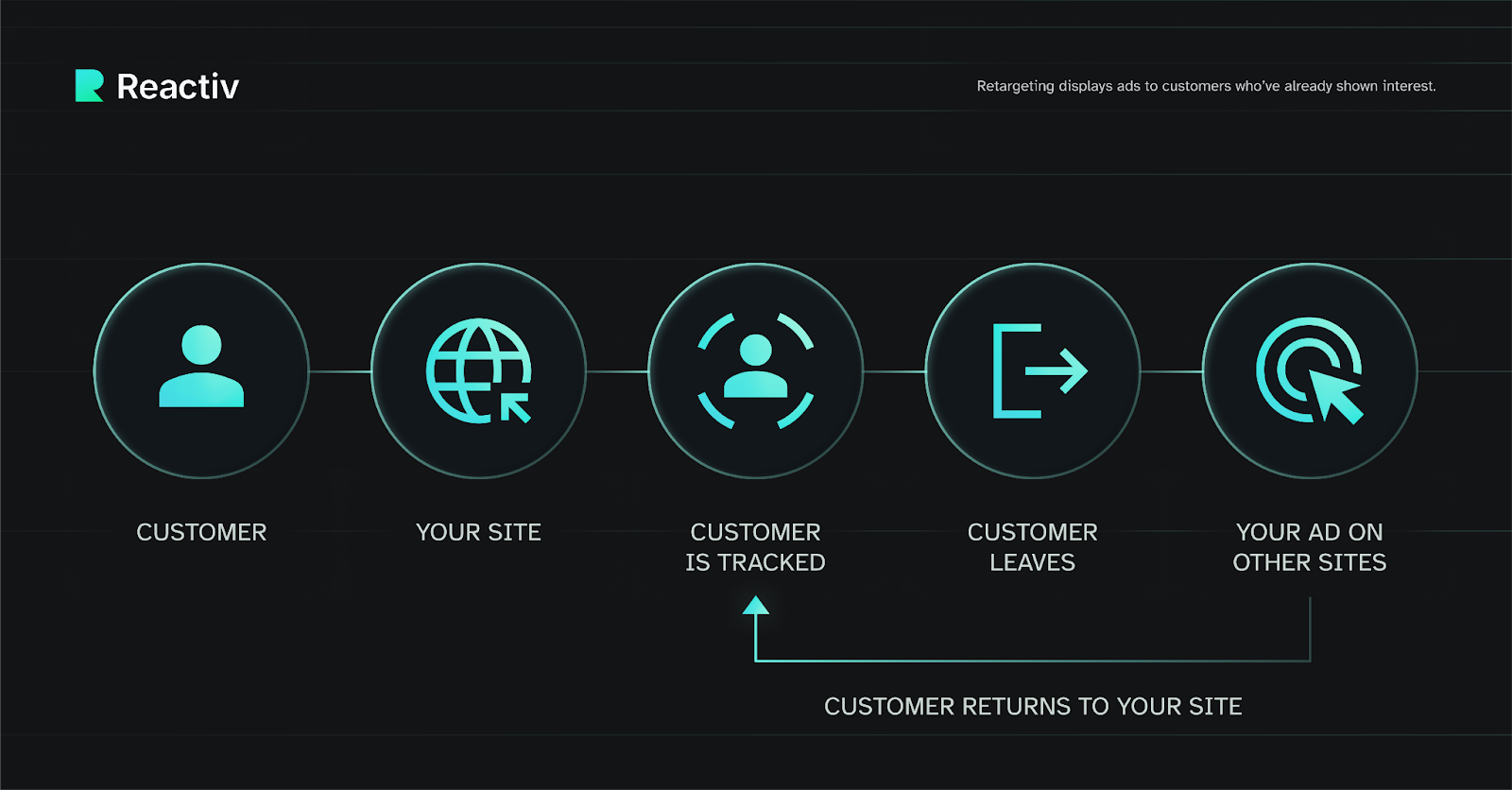
Retargeting re-engages people who have visited your website or mobile app through paid ads. The graphic below provides a high-level look at how retargeting ads work:
How is retargeting data collected?
There are 2 main types of retargeting ads. The primary difference between them is how the list is populated:
Pixel-based retargeting
This approach uses small pieces of code that allow your site to place and track cookies for every visitor on your website. The retargeting tool you use accesses each customer’s unique ID code and adds them to a specific audience segment or retargeting list once they’ve completed a specific action.
List-based retargeting
This approach uses email addresses collected from visitors. If you have the email addresses of a group of visitors, you can upload this information to your retargeting platform (Google Ads, X, TikTok, Meta, etc.) to match them and target these users.
You can create lists for specific actions, such as abandoning a cart or visiting a product category page, and then tailor your remarketing to these specific groups.
How do retargeting ads benefit ecommerce brands?
The benefits of retargeting ads are immeasurable—ok, maybe they’re a little measurable. What we mean is that there are a ton of benefits, which include:
- Higher conversion rates - retargeted ads give customers the extra push they need to make a purchase. Because the ad is personalized to their journey, retargeted users are 70% more likely to convert.
- Strategic product placement - 37% of customers click on retargeted ads because they’re drawn to the displayed product.
- Higher ad engagement - Retargeted ads have a 10x higher click-through rate (CTR) than typical display ads, with an average CTR of 0.7%.
- Increased brand recall - retargeted ads increase branded searches by 1046%. This means that even if your ad isn’t converting directly, customers are remembering your brand and coming back to your site.
- Reach customers at multiple touchpoints with omnichannel retargeting - with the right strategy, you can target customers across a multitude of devices and channels like Google ads, social media ads, direct email, and SMS.
7 retargeting best practices to level up your conversion rates
There are many strategies, ranging from high-level to extremely granular, that can let you accomplish some amazing things, but the limitless freedom can be a little daunting. So here’s a list of real retargeting examples to help:
1. Clearly define your audience segments and campaign goals
User behavior is a great method of creating actionable audience segments and remarketing lists. These can include:
- Cart abandoners
- Product viewers
- Past purchasers
- Subscribers
With these segments in mind, you can create precisely targeted and segmented campaigns that could increase your ROI by 760%. For maximum efficiency, ensure you create clear goals for each campaign that align with the relevant audience segment or list.
For example:
- Welcome discounts to drive acquisition for first-time visitors
- Time-sensitive offers for visitors who viewed a certain product that’s on sale
- Cross-sell or recommended product campaigns for browse abandoners to increase average order value (AOV)
AG1 uses Instagram Feed ads to retarget previous visitors who haven’t made a purchase with a free welcome kit offer.

2. Limit how often you retarget each segment
Nobody likes it when a salesperson follows them in a store, and it’s not much fun online, either!
You don’t want prospective customers feeling like you’re following or hounding them everywhere they go. This creates brand fatigue.
With 71% of people saying that annoying or intrusive ad experiences make them less likely to purchase from that brand in the future, it’s important to take this seriously. Use frequency capping and rotate your ad images and formats to stay relevant without being repetitive.
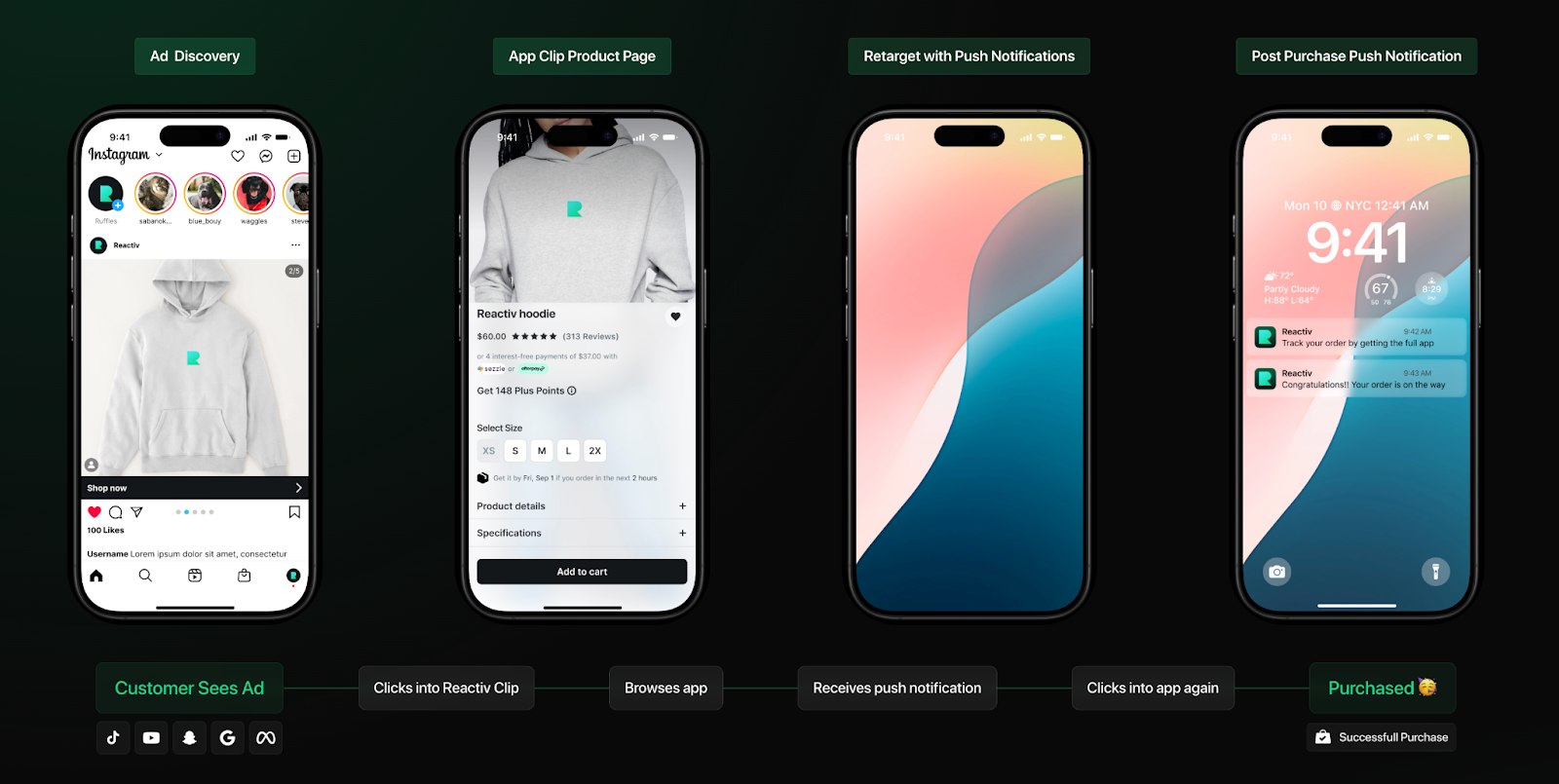
With Reactiv, you can control the timing and delivery of push notifications with Clips.
Reactiv Clips give you an 8-hour window to send push notifications to a visitor after they engage with your ad, without requiring an opt-in or download. This allows you to retarget every ad click through personalized follow-ups on iOS, and ensures your messages land with the right frequency so you don’t scare potential customers away.
3. Design mobile-first retargeting ads
For most ecommerce brands, mobile shoppers account for the majority of their traffic. However, the higher bounce rate that comes with this traffic means more missed sales opportunities. 69.02% of mobile shoppers abandon their carts—higher than any other device.
Design your retargeting ads to be mobile-first, but remember this means more than just being mobile responsive. It means vertical-friendly layouts, fast load times, and native-feeling interactions.
Social media retargeting ads are a great example - vertical videos shown in Reels or TikTok feeds, swipeable carousels on FB or IG, and “tap-to-buy” messaging that feels native to the platform are all great ways to blend in.
Good Protein retargets customers through an Instagram Reel ad that doesn’t disrupt their scrolling experience.
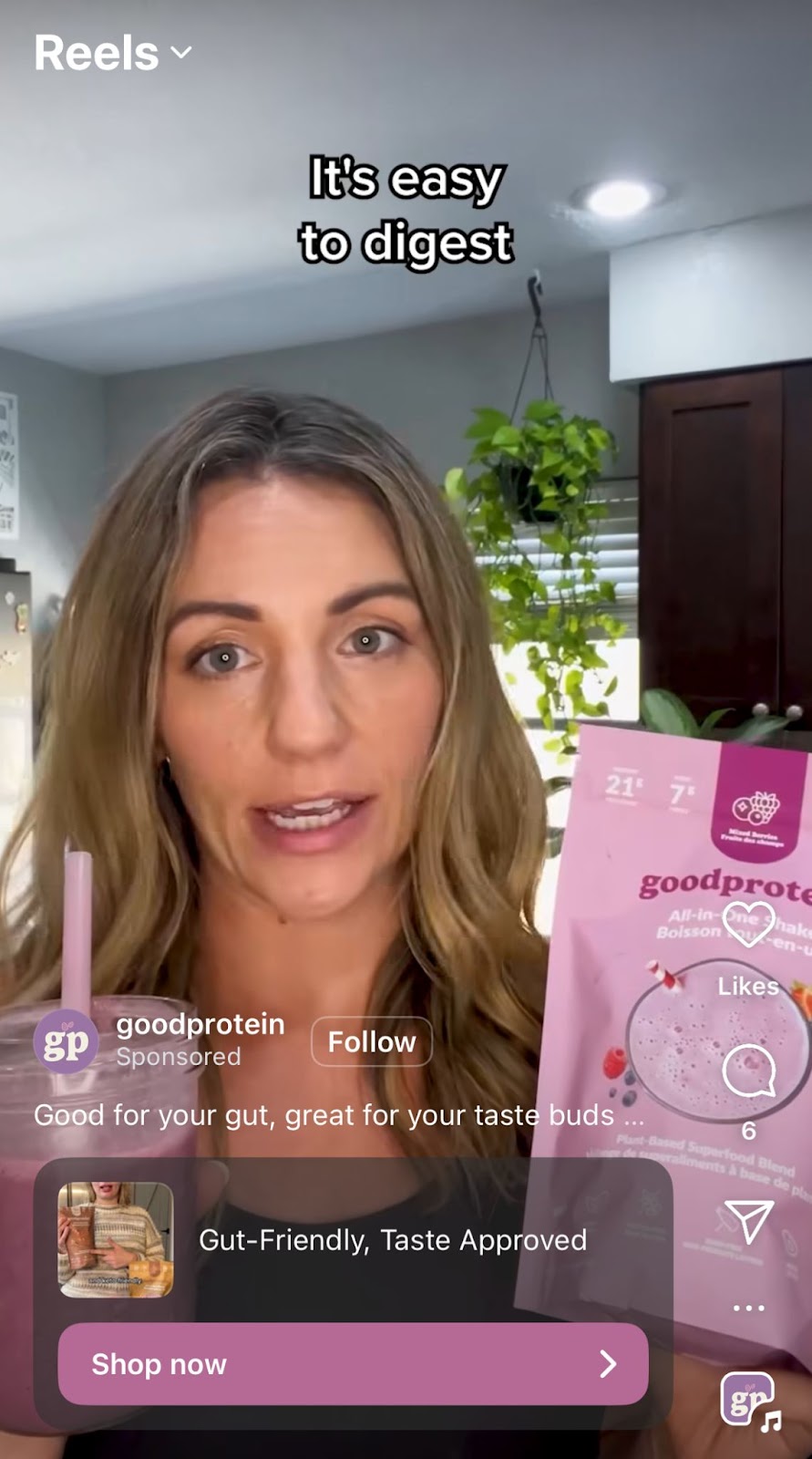
It features brand ambassadors using the product and describing the benefits, perfectly aligning with the endless stream of influencer and ambassador content that’s already prominent on the platform. The only clues that this is an ad are the “Sponsored” call-out and the call to action (CTA) to “Shop now”
4. Use a variety of images, text, and ad formats
Ad fatigue is real. Everyone is constantly bombarded by ads on every platform and every device. Mix up the imagery, format, and CTAs on your ads to keep them fresh and improve the likeliness of engagement.
One way to do this is to use multiple ad formats, such as:
- Static images
- Videos
- Carousels
- Social media collection ads
- Search ads
- Display network ads
Most retargeting tools will let you A/B test headlines, visuals, and CTAs to optimize your ads' performance.
You should also A/B test your offer by experimenting with both emotional and practical copy. For example, are you leading with the customer pain points your product solves? Or are you just offering 10% off to get that first sale? Test both and see which resonates more.
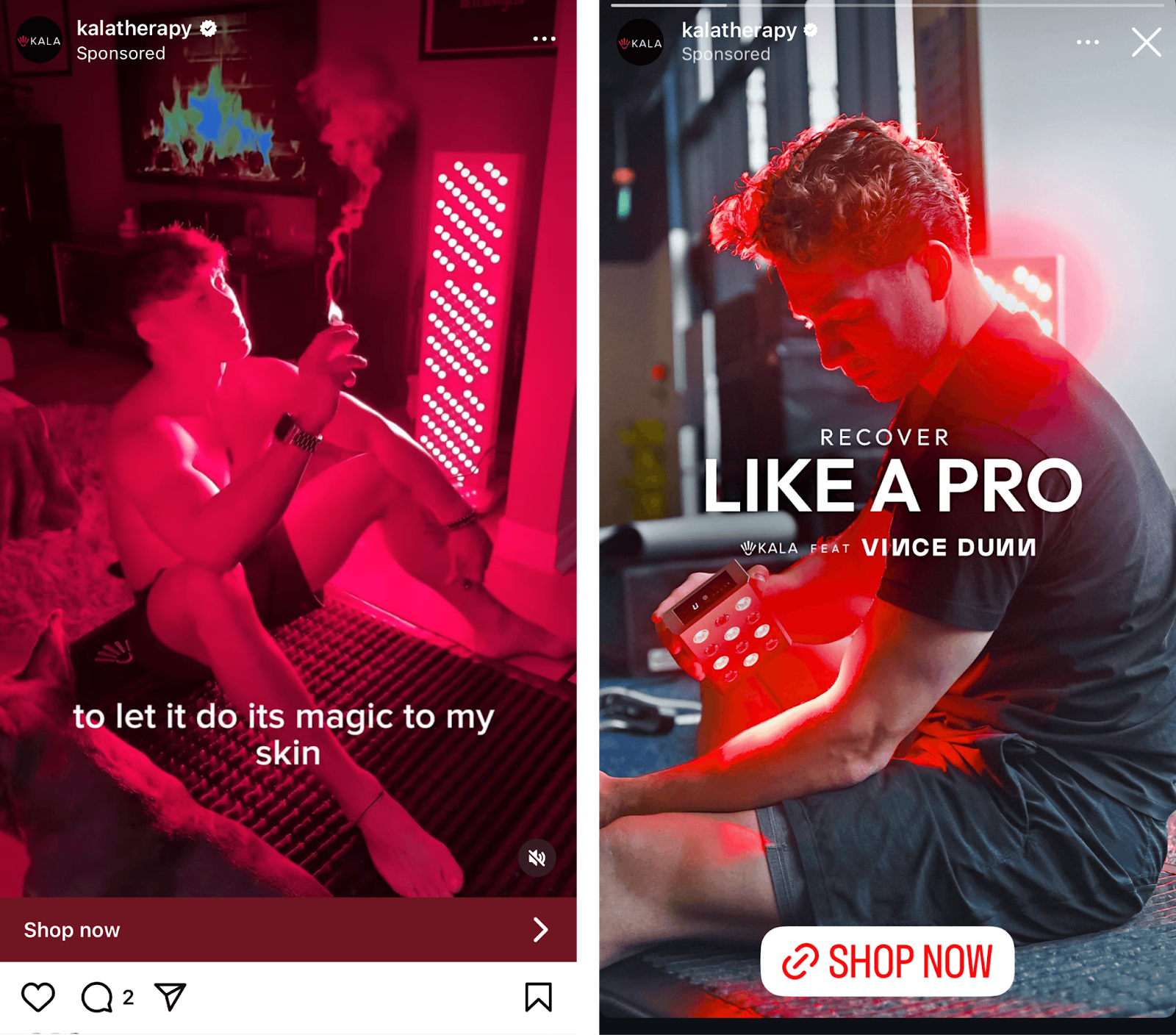
Kala Therapy promotes its red light therapy products in a variety of ad formats to show off their offering in multiple styles. They use an Instagram Feed video ad to show how an ambassador uses the product, as well as an Instagram Story static image ad that showcases their collaboration with a professional Canadian hockey player.
5. Create, test, and optimize your call to action (CTA)
This one’s a no-brainer — the CTA is arguably the most important part of any ad.
Personalized CTAs convert 42% more visitors into leads than untargeted CTAs, so when building retargeting ads for different segments, you’ll want to tailor your CTA to the relevant funnel stage.
“Learn more” is a great CTA for first-time web visitors, while “Claim My Offer” is strong for winning back cart abandoners.
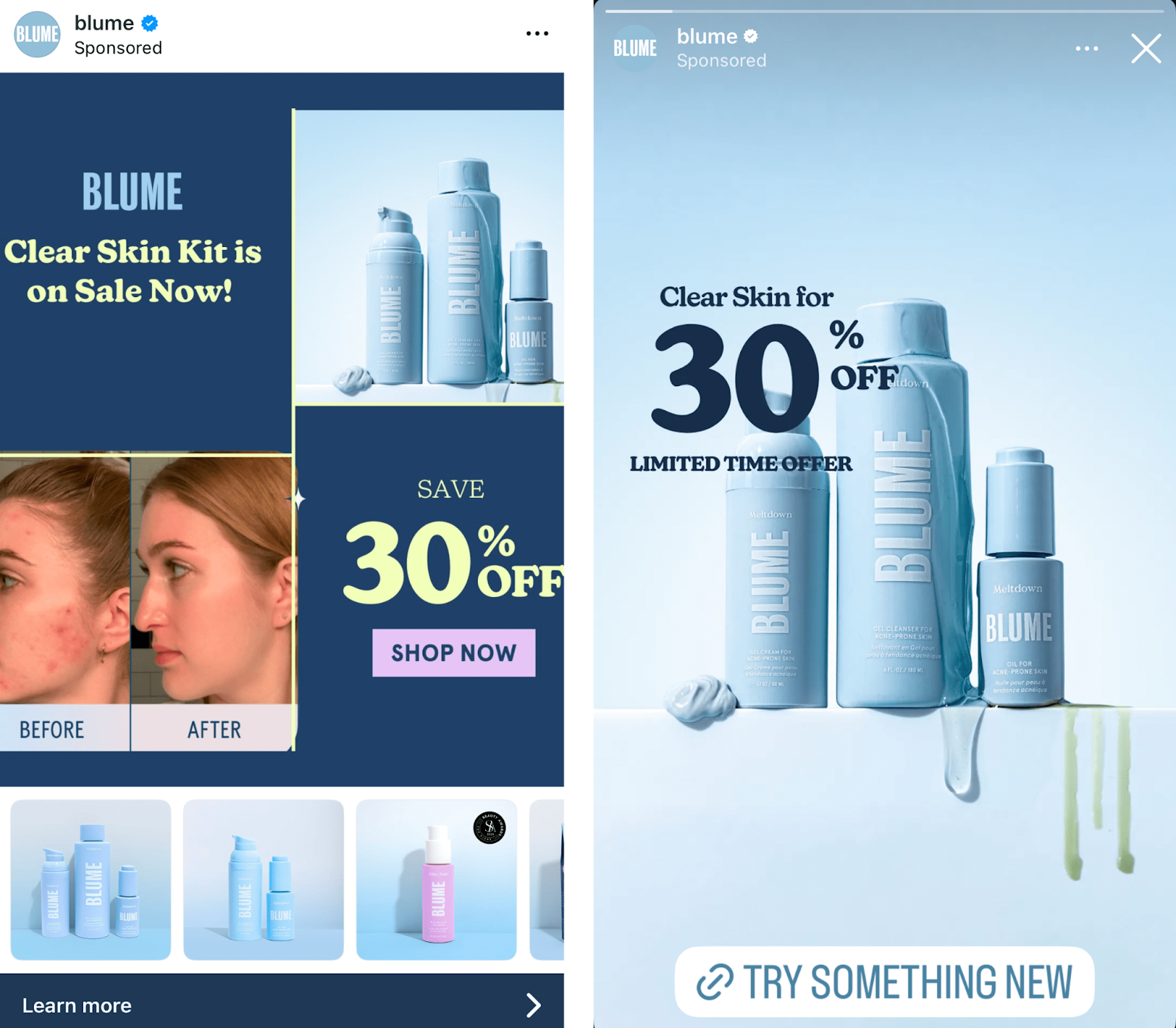
Blume promotes the same offer (30% off their Clear Skin Kit) in each of their Instagram ads. However, one ad uses social proof and guides the user to “Learn more”, while the other tells the customer to “Try something new”.
6. Try dynamic retargeting for specific products or collections
Dynamic ads can automatically show users the exact products they viewed or similar ones that you want to cross-sell/up-sell them on.
Facebook Dynamic Product Ads and Google Dynamic Remarketing are both common tools for dynamic ad retargeting. This leads to a more personalized feel for the ads as well as a higher chance of re-engaging since it’s a product/product category the visitor has shown interest in before.
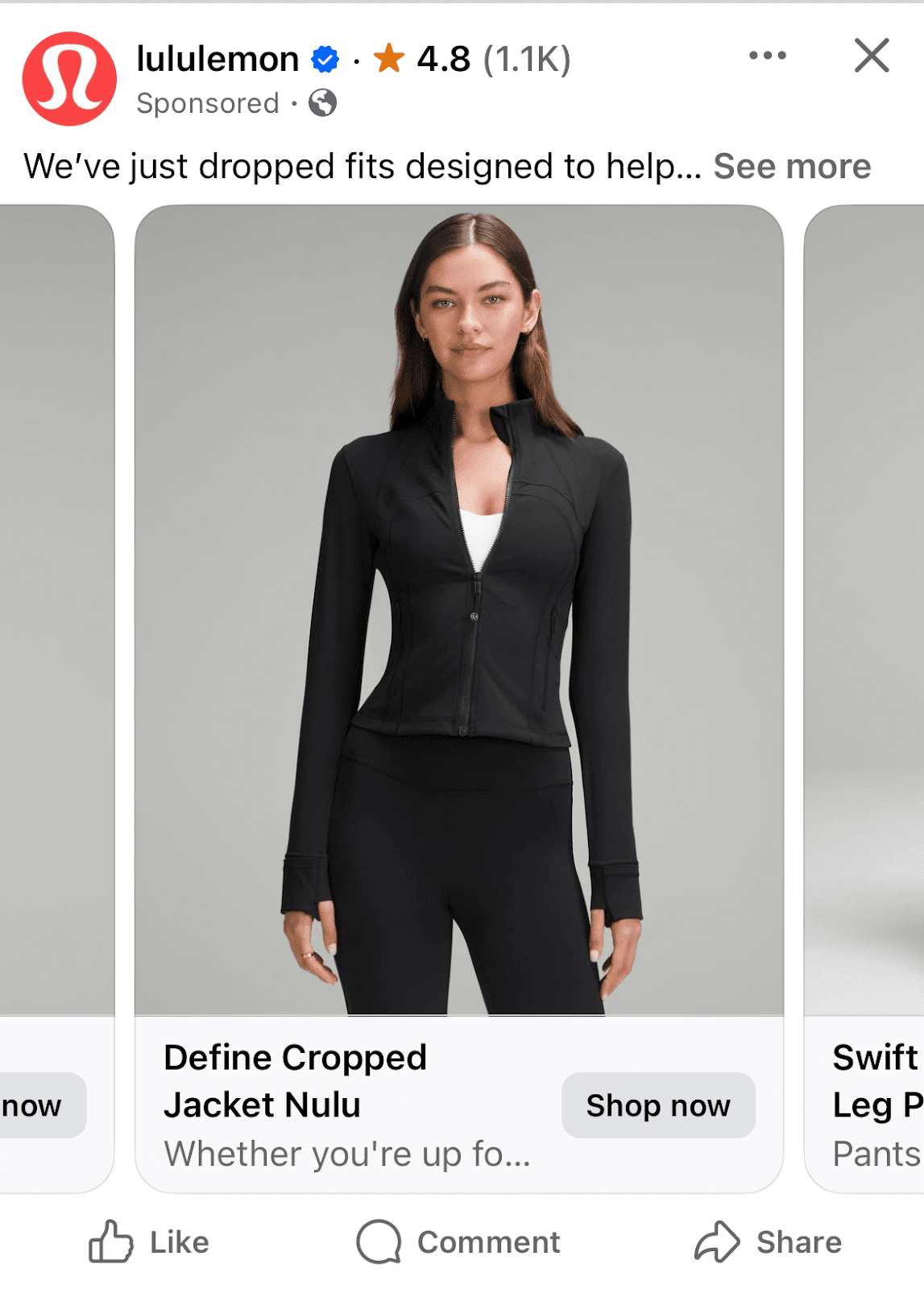
This Lululemon dynamic Facebook ad shows the user a carousel of products they’ve previously browsed to move them down the funnel.
7. Pair retargeting ads with other remarketing strategies and channels
At some point, you may come across the term “remarketing.” While it sounds different, it is different than “retargeting” (there’s an article about the differences here).
So, which should you be using? Trick question—the answer is both!
Customers interact with your brand across multiple touchpoints. Your ads should, too.
Retarget across Google, Meta, and social media ads, as well as direct remarketing tactics like email, SMS, and push-enabled Reactiv Clips for maximum reach and consistency.
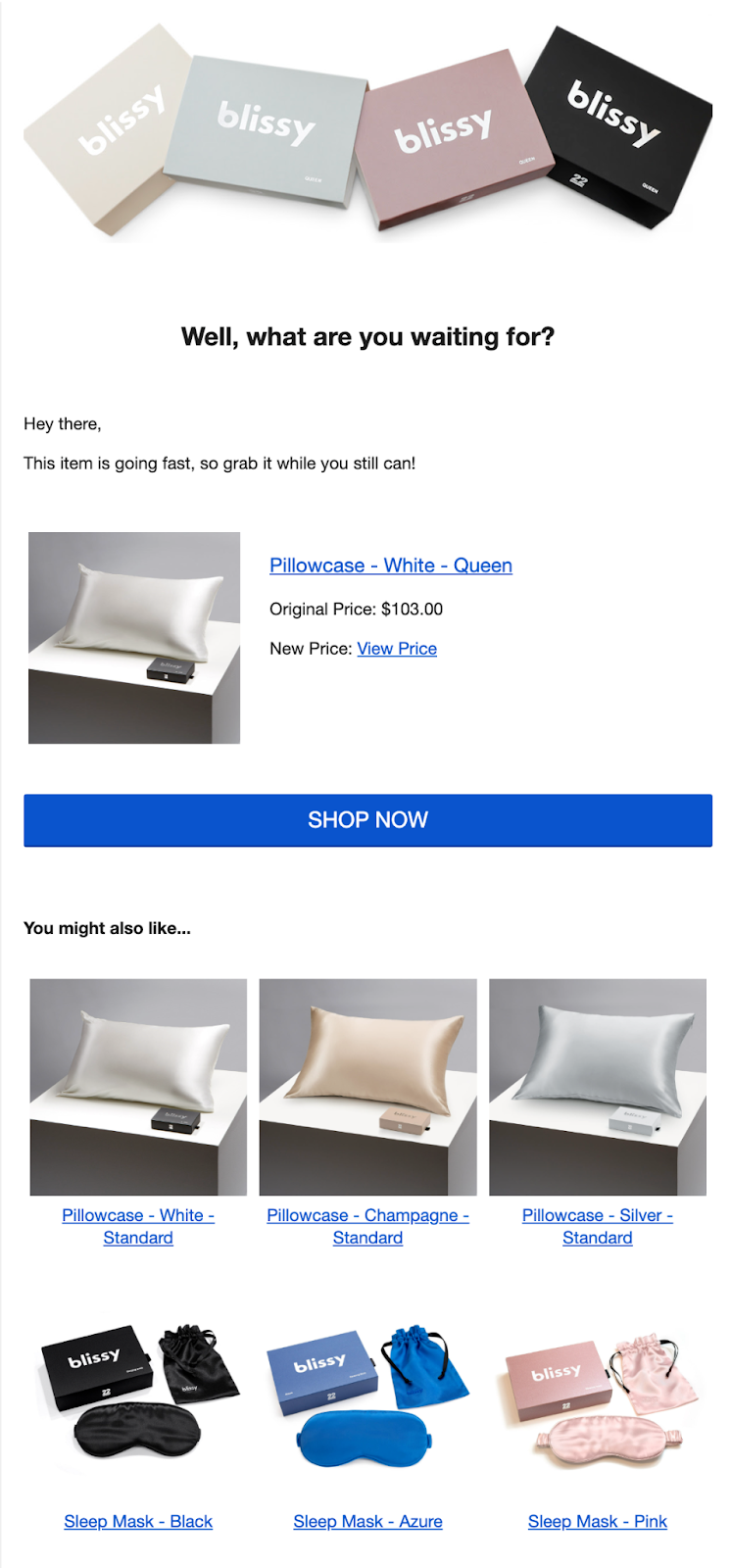
Blissy employs multiple remarketing and retargeting ads best practices through their omnichannel approach and have created their own remarketing and retargeting ecosystem.
They use search ads to retarget the customer and promote their biggest sale of the year. Simultaneously, Blissy sends a remarketing email about a product they left in their cart, with multiple related product recommendations for cross-sell and up-sell opportunities.

Use Reactiv to put these retargeting strategies into action
If you direct your ads to a Reactiv Clip, you can retarget anyone who engages and get started on your way to a 3x ad conversion rate increase.
Reach out to us if you want our help getting started with your retargeting strategy. If you’re not ready yet, maybe you’ll see us again while you’re browsing!



See Reactiv on your storefront.
Book a demo and we'll walk you through native apps and App Clips running on your Shopify store.